 EN
EN


The Event Date Should Shape the Medal Plan
For an event organizer, the medal order is connected to a fixed date. The awards must be ready when the event takes place, not simply when the design feels finished.
The safest approach is to plan backward from the event date. Instead of asking only, “How fast can the medals be made?”, buyers should identify every approval point that can affect the final schedule:
- Artwork and wording confirmation
- 3D structure review
- Production preparation
- Finished-product inspection
- Packing and shipment arrangement
- International transportation buffer
The exact schedule depends on the medal design, quantity, production requirements, approval speed and destination. A responsible supplier should calculate the plan from the actual project information rather than offer a fixed promise before reviewing the details.
Start With the Information That Cannot Change Later
Before a design is developed, prepare the information that will appear on the medal. This may include the event name, year, distance, category, organization identity, country, city, sponsor wording or participant group.
The more complete the information is at the beginning, the less likely it is that the artwork will need to be rebuilt later. A late change to a name, logo, date, size or medal shape can affect not only the artwork but also the 3D model, mold preparation and production planning.
Before sending the first design direction, confirm:
- The exact event wording and spelling
- The number of medal versions
- The approximate quantity for each version
- The preferred shape and size direction
- The required ribbon or attachment style
- Whether the front, back or both sides need custom artwork
- The fixed date when the medals must be available
This preparation does not make the design process rigid. It gives the factory a reliable starting point and reduces avoidable revision cycles.
Stage 1: Confirm the 2D Artwork
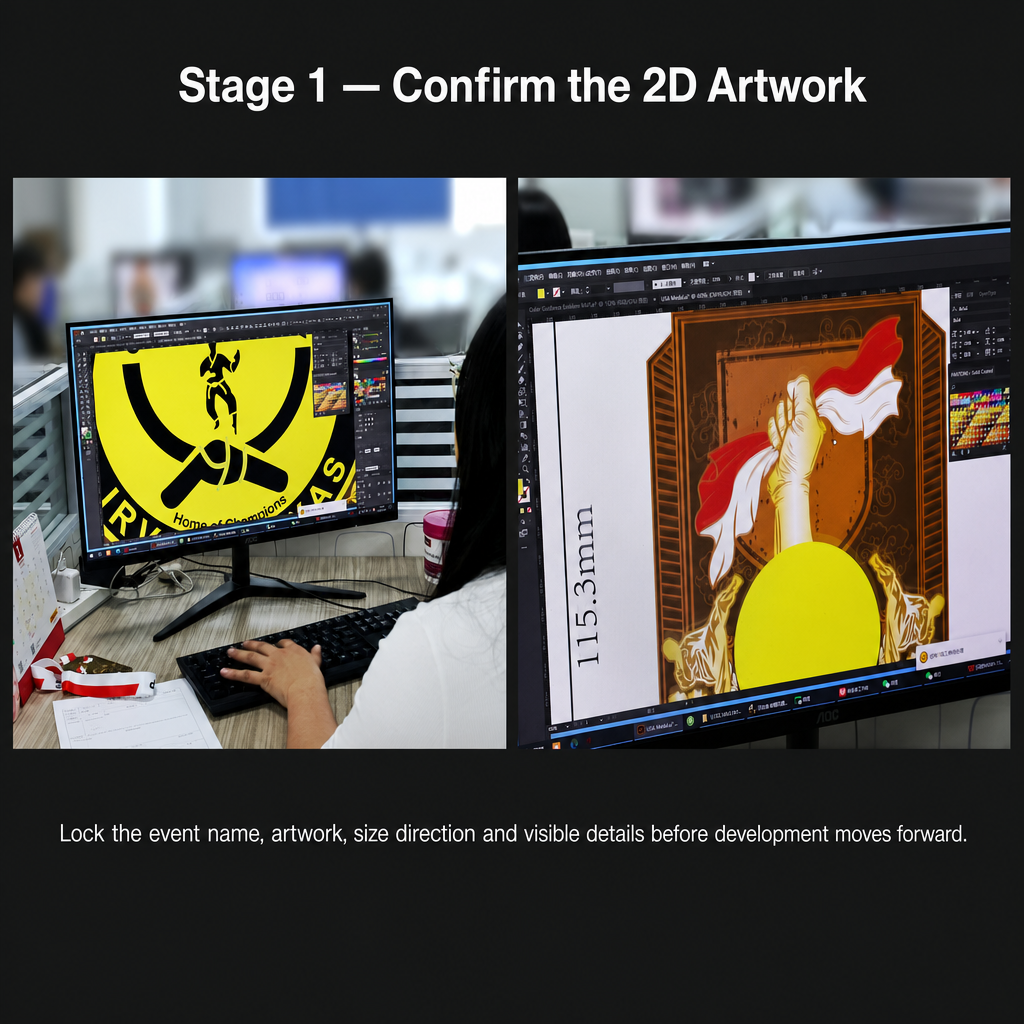
Real design-work photos showing artwork being reviewed on screen, including the event graphic, color direction and visible design details before 3D development.
The 2D stage is where the visual idea becomes a production reference. At this point, the organizer should review the main shape, wording, color areas, event identity and overall composition.
For a medal project, the 2D approval should answer questions such as:
- Is the event name correct?
- Is the main symbol easy to recognize?
- Are the colors suitable for the event identity?
- Is the text large enough for the final medal size?
- Does the artwork show the front, back or both sides?
- Are the medal and ribbon being treated as one visual system?
A useful approval is more than “looks good.” It should identify which artwork version is approved and which details are still open for discussion. This gives the following stages a clear reference.
Why 2D Changes Should Be Closed Early
Changes made while the project is still in the artwork stage are generally easier to manage than changes made after 3D development or production preparation. That is why buyers should take time to check text, colors and composition before approving the next stage.
The goal is not to rush the approval. The goal is to avoid carrying unresolved decisions into a stage where they become more expensive or time-consuming to change.
Stage 2: Review the 3D Development
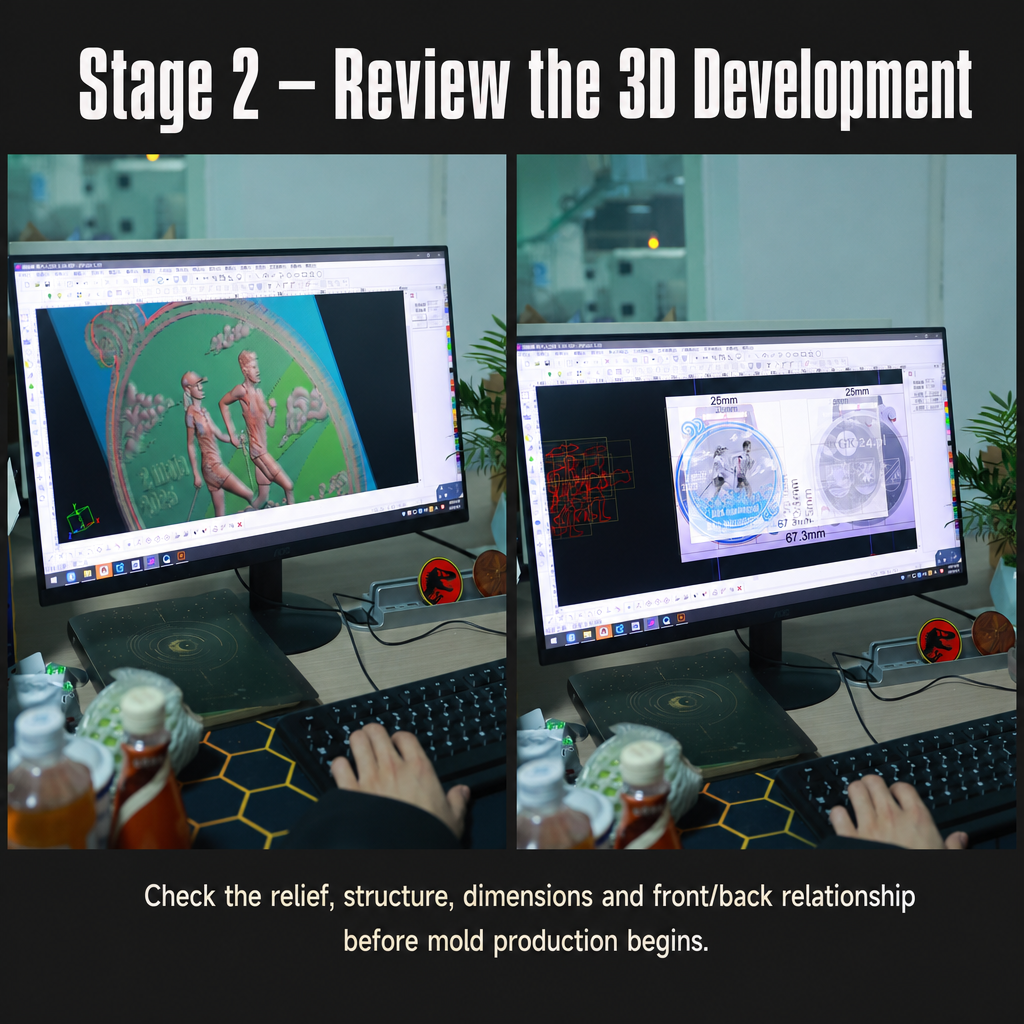
The 3D stage translates the artwork into a medal structure, allowing the buyer to review relief, dimensions, front-and-back relationships and physical proportions before production preparation.
The 3D stage is important because a flat artwork does not show everything that will happen in metal. The relief, recessed areas, raised borders, cut-out parts, rim thickness, lettering and connection points need to work as a physical object.
Buyers should review:
- The overall medal proportions
- The depth and hierarchy of raised elements
- The clarity of small text and symbols
- The position of the hanging hole or connector
- The relationship between front and back
- The balance of decorative and functional details
- Whether the design remains recognizable at the proposed size
The 3D review is also a scheduling checkpoint. When the 3D structure is approved clearly, the factory can move to the next preparation stage with less risk of returning to the artwork.
Do Not Treat 3D Approval as a Formality
A 3D rendering should not be approved only because it resembles the 2D drawing. It should be checked as a physical medal. A design can look attractive on a screen but still need adjustments if its relief is too shallow, its details are too crowded or its connections are not practical.
A careful 3D review protects both the design quality and the event schedule.
Stage 3: Confirm the Finished Awards
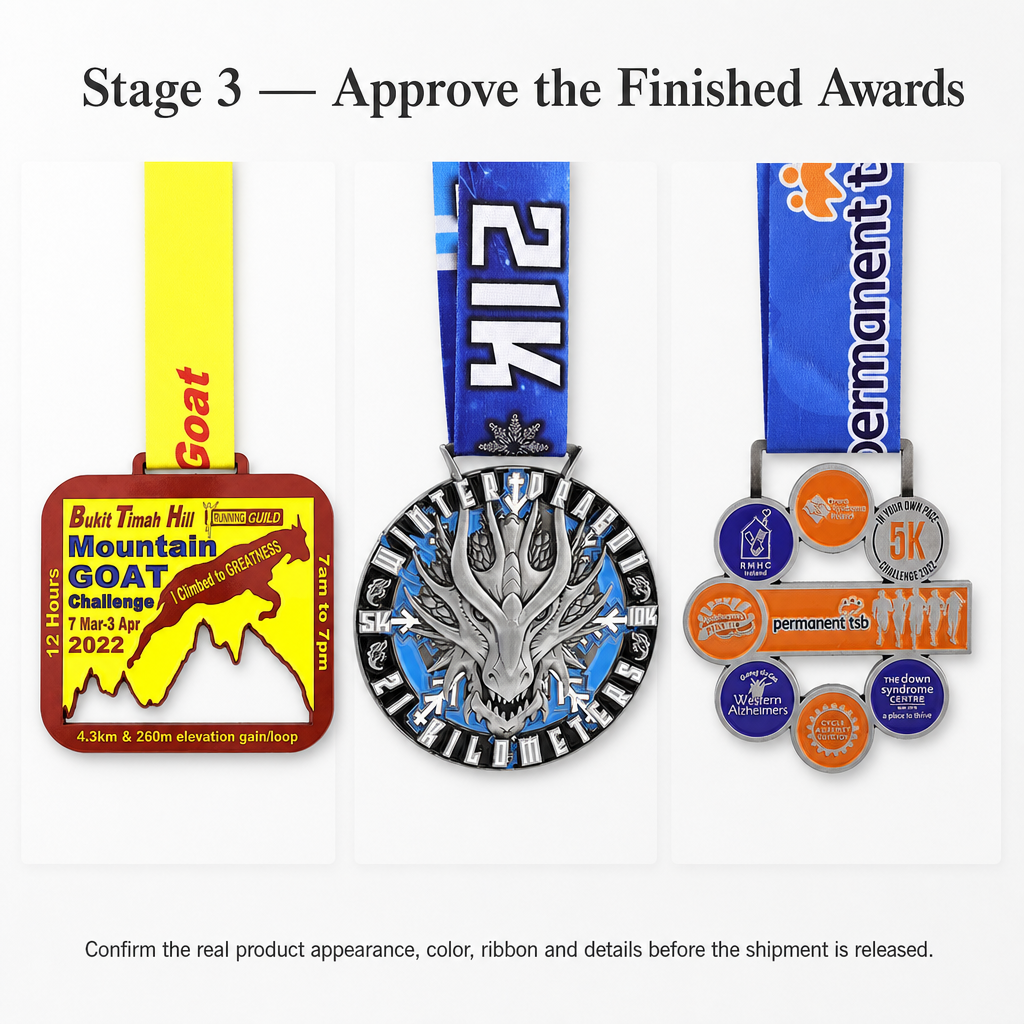
Three finished award examples show why the final product should be checked for shape, color, visible wording, ribbon appearance and overall presentation before shipment is released.
A finished-product review is different from a design approval. The design may be correct, but the buyer still needs to inspect how the approved idea appears as a real award.
The review should cover:
- Medal shape and overall proportions
- Surface finish and visible color areas
- Relief clarity under normal light
- Event wording and small details
- Ribbon color, width and attachment
- Any special charms, connectors or secondary pieces
- Quantity and version identification before packing
If the event date is fixed, this stage should not be left until the last possible moment. The buyer needs enough time to raise a genuine quality question and for the supplier to respond before the cartons leave the factory.
Use Real Product Evidence
Finished-product photos and short videos can help the buyer review the award from more than one angle. They also create a shared reference between the organizer and the factory: both sides can discuss the actual product rather than relying only on a screen rendering.
The purpose of this step is not to create unnecessary delay. It is to make the final approval clear before shipment.
Stage 4: Pack, Verify and Dispatch
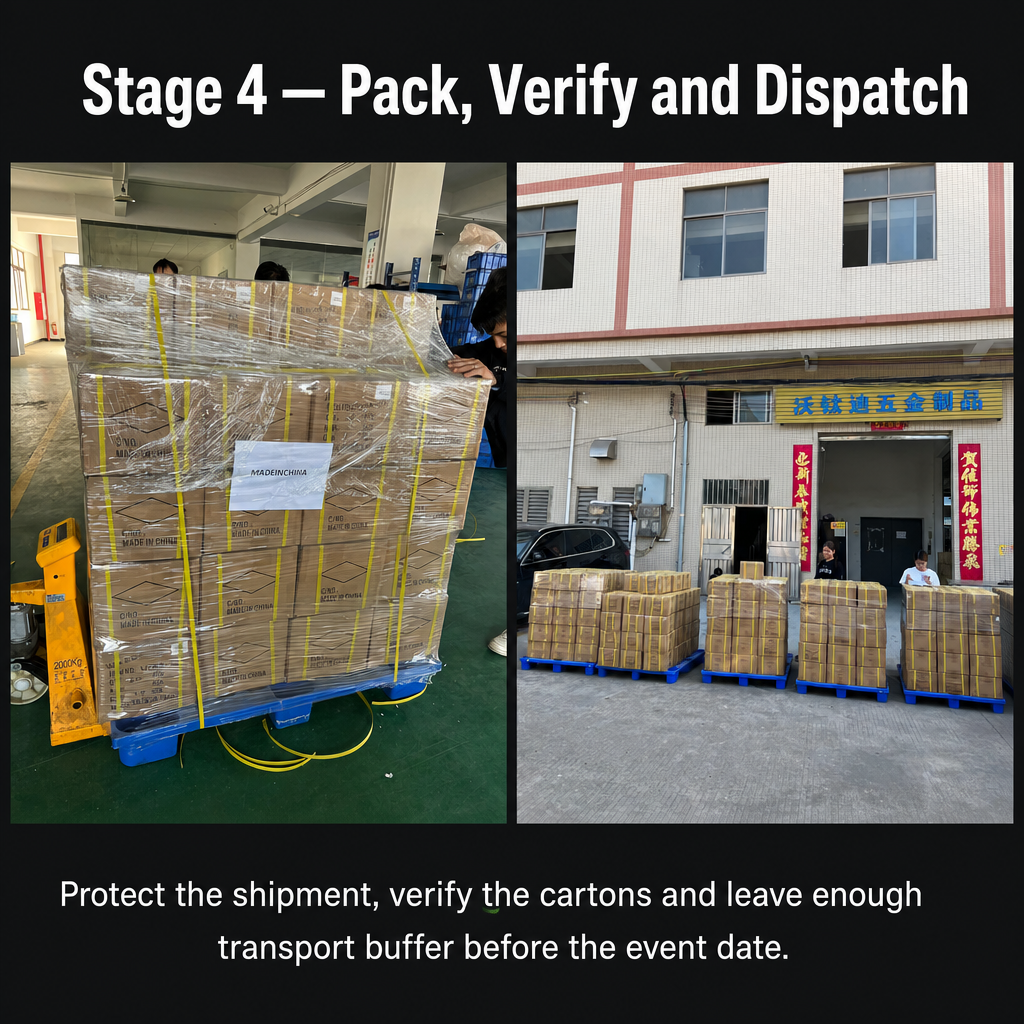
Real shipment photos show cartons wrapped on pallets and prepared outside the factory. Packing and dispatch planning are part of the event-date schedule, not separate from production.
A medal order is not complete when the products leave the finishing area. The shipment must also be packed, identified and arranged for transport.
Before dispatch, the buyer and supplier should confirm:
- The number of cartons or packages
- Which medal versions are included
- The external carton markings
- The shipping destination and delivery arrangement
- Whether the shipment requires palletizing or additional protection
- Which transport buffer is needed for the destination
- Who will receive the shipment and check it on arrival
International delivery time can vary by destination, transport method, customs handling and seasonal conditions. That is why an event organizer should not plan around the shortest possible transportation scenario.
Packing Is Part of Risk Management
The purpose of packing is not only to make cartons look tidy. It is to protect the products during handling and to make the shipment easier to identify when it arrives.
A clear dispatch record, carton count and shipment update help the organizer track the order while preparing the event. This is especially important when the medals will be distributed to many participants or separated into several categories.
How to Build a Safer Backward Plan
A practical planning method is to work backward from the event date in four blocks:
Block 1: Event and Artwork Information
Set the event name, date, quantity, categories, wording, logo and design direction before the artwork is finalized.
Block 2: Design Review
Allow time for 2D artwork confirmation and 3D structure review. Do not treat customer approval as an instant step; decision-makers may need time to review internally.
Block 3: Finished-Product Confirmation
Plan a checkpoint for real product photos or video, especially when the order includes multiple versions, complex relief or special attachments.
Block 4: Packing and Transport
Leave room for packing, dispatch, international transportation and receiving inspection. The available buffer depends on the destination and shipping method, so it should be confirmed for each order.
This method is safer than starting with a production promise and trying to fit the event date afterward.
Common Planning Mistakes That Create Pressure
Waiting Until the Event Is Close
A short calendar window leaves little room for design revisions, approval delays or transport uncertainty.
Sending Incomplete Artwork
Missing text, unclear logos or undecided medal versions can create repeated revisions.
Changing the Design After 3D Approval
A late change may affect the structure, proportions, mold preparation and production plan.
Confirming Only the Product, Not the Ribbon
The medal body may be approved while the ribbon color, printing or attachment is still unclear.
Planning Only for Factory Completion
The date the factory finishes the goods is not necessarily the date the organizer receives them. Packing, dispatch, transportation and receiving time all matter.
Relying on a Fixed Timeline Without Project Details
A realistic schedule needs the actual design complexity, quantity, number of versions, approval process and destination. Buyers should request a project-specific plan rather than a general promise.
Information to Send When Requesting a Custom Medal Schedule
To receive a useful production and delivery plan, prepare:
- Event date and receiving deadline
- Destination country and city
- Medal artwork or design reference
- Quantity and number of versions
- Approximate size direction
- Front-and-back requirements
- Ribbon and attachment requirements
- Any special packaging or labeling needs
- Internal approval contact and decision process
The more complete this information is, the easier it is for the supplier to identify the major scheduling risks before the order begins.
Final Thoughts
Planning a custom medal around an event date is not about forcing every order into the same fixed number of days. It is about identifying the real checkpoints early enough that design decisions, production preparation, finished-product approval and transportation can be managed as one connected plan.
The safest sequence is:
Confirm the artwork → review the 3D structure → approve the finished awards → pack, verify and dispatch.
When the organizer and supplier agree on these checkpoints from the beginning, the medal order becomes easier to track and the event team has a clearer view of what still needs to be completed.
Zhongshan Wotid Hardware Co., Ltd. supports custom event medal projects from artwork review through finished-product confirmation and shipment preparation. Send us your event date, design direction, quantity and destination so we can help evaluate the appropriate order plan for your project.
Table of Contents
- The Event Date Should Shape the Medal Plan
- Start With the Information That Cannot Change Later
- Stage 1: Confirm the 2D Artwork
- Stage 2: Review the 3D Development
- Stage 3: Confirm the Finished Awards
- Stage 4: Pack, Verify and Dispatch
- How to Build a Safer Backward Plan
- Common Planning Mistakes That Create Pressure
- Information to Send When Requesting a Custom Medal Schedule
- Final Thoughts