 EN
EN

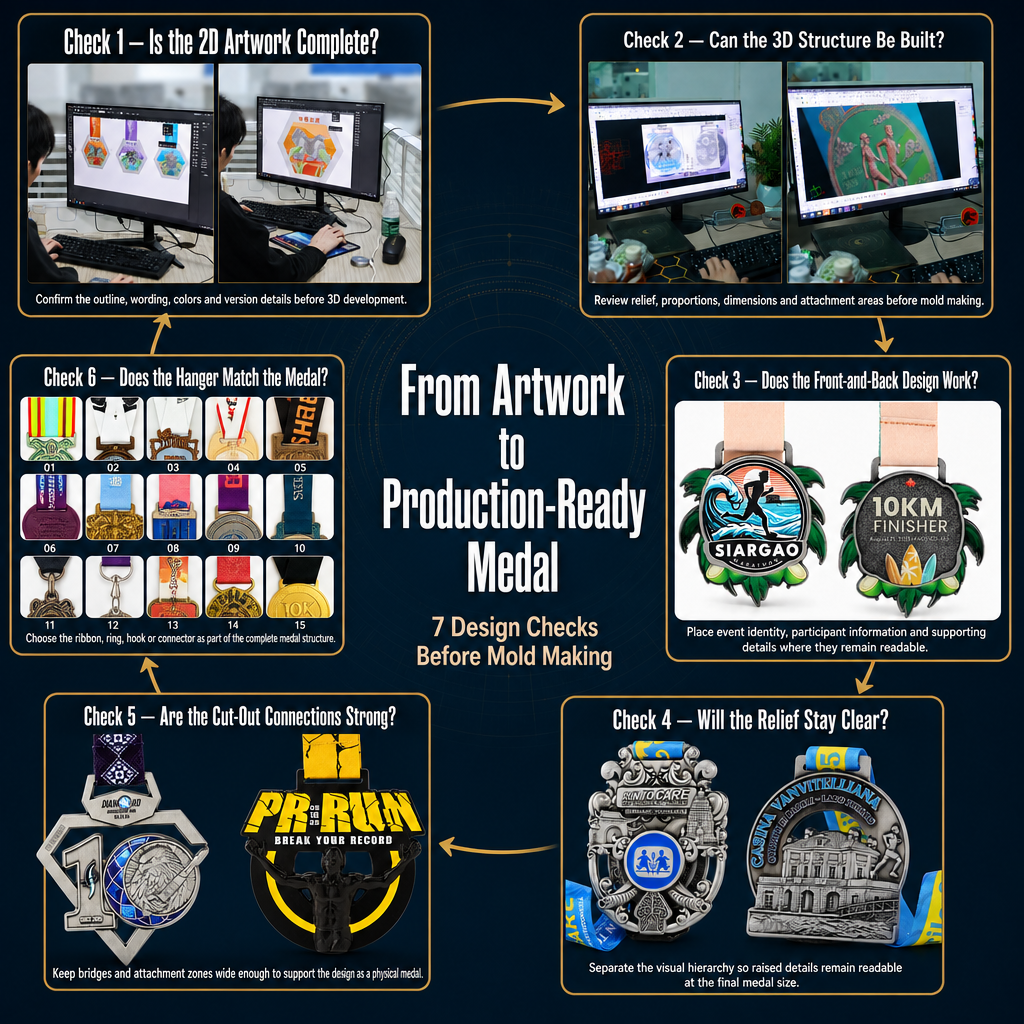
A Good Drawing Is Not Automatically a Production-Ready Medal
A custom medal may look complete on a screen and still need important adjustments before mold making. The reason is simple: artwork is usually viewed as a flat image, while a medal must become a physical object with readable details, connected sections, a practical hanging system and a consistent front-and-back design.
For event organizers, schools, sports clubs and award buyers, the most useful question is not only “Does the design look attractive?” It is also:
Can this design be translated into a stable, readable and complete medal?
The following seven checks help identify problems before mold preparation begins. They also create a clearer approval process between the buyer and the medal manufacturer.
Check 1: Is the 2D Artwork Complete?
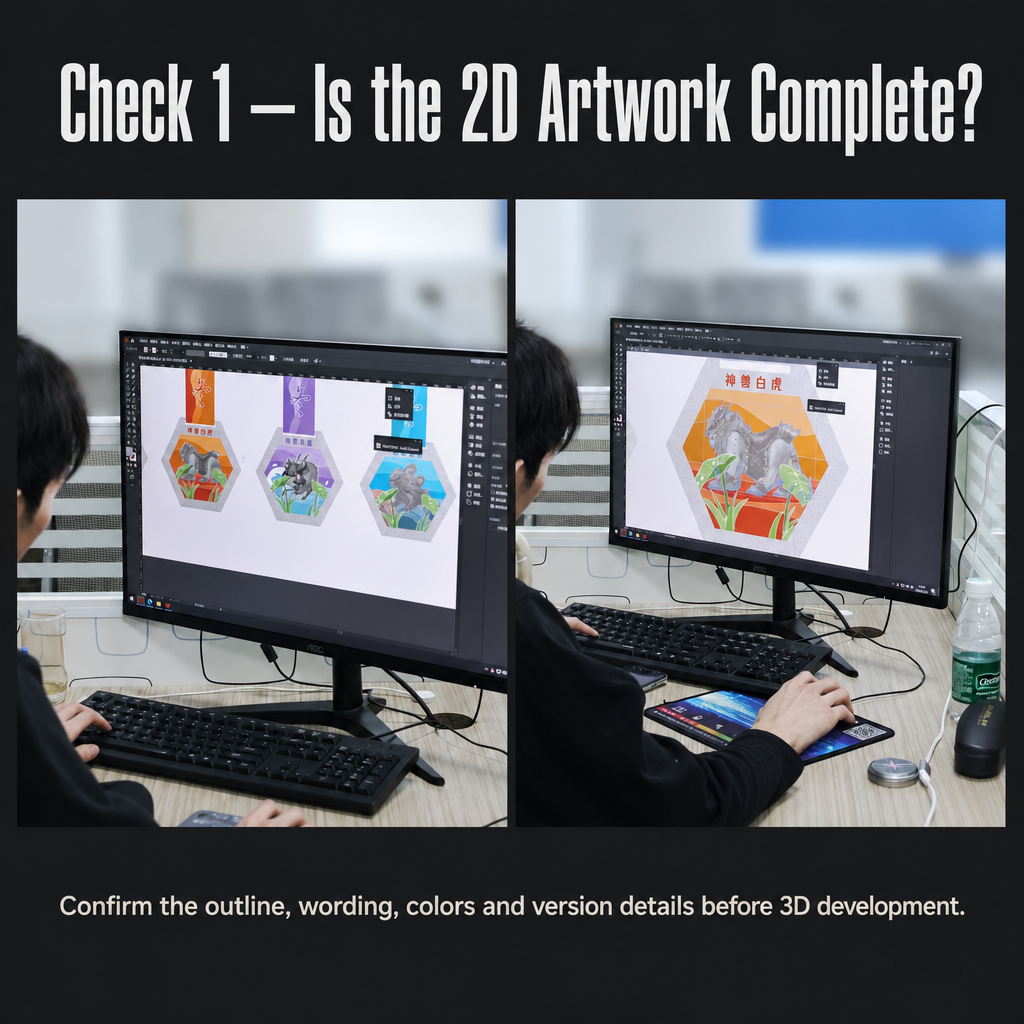
Real 2D design-work photos showing multiple medal versions and a detailed award layout being reviewed before 3D development.
The 2D drawing should give the factory a reliable visual reference. It should not leave essential decisions open while the project moves to the next stage.
Before approving the artwork, check:
- The outer outline and overall shape
- The event name and wording
- The number of medal versions
- The main colors and color areas
- The front, back or double-sided requirements
- The visual relationship between the medal and ribbon
- Any logo, date, category or participant information
If the project includes several versions, show them together where possible. A group view makes it easier to compare the outline, color system and shared design language before each version becomes a separate production file.
Why the 2D Stage Matters
A late change to the outline or artwork can affect the 3D model and later preparation. Closing the main visual decisions early does not mean every technical issue has already been solved; it means the factory has a stable design direction to develop.
Check 2: Can the 3D Structure Be Built?
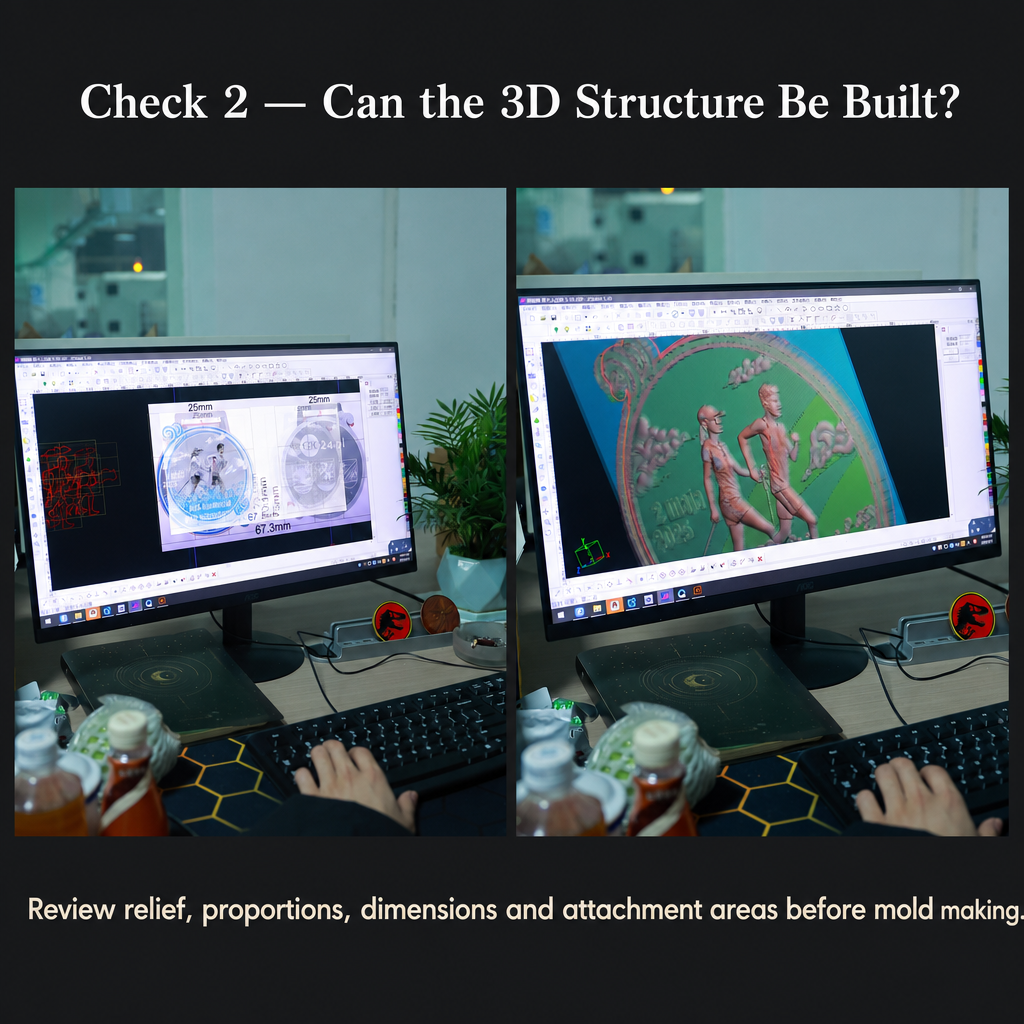
Real 3D modeling-work photos showing relief development, front-and-back views and dimensional review before mold making.
3D development turns a flat drawing into a physical structure. It helps the buyer and factory review how the main elements relate to one another in depth and proportion.
The 3D review should cover:
- The overall proportions of the medal
- The hierarchy between raised and recessed areas
- The relationship between the main subject and border
- The readability of lettering and symbols
- The space needed for openings or attachments
- The relationship between front and back
- Any areas that may become too crowded at the final size
A design can contain many attractive details and still need simplification or reorganization. The aim is not to remove character. The aim is to keep the important elements visible and structurally connected when the design leaves the screen.
Review the Design as an Object
Do not approve the 3D view only because it resembles the 2D artwork. Ask whether the design makes sense as something that will be held, worn, handled and viewed from normal distances. This object-based review can reveal issues that are easy to miss in a flat illustration.
Check 3: Does the Front-and-Back Design Work Together?
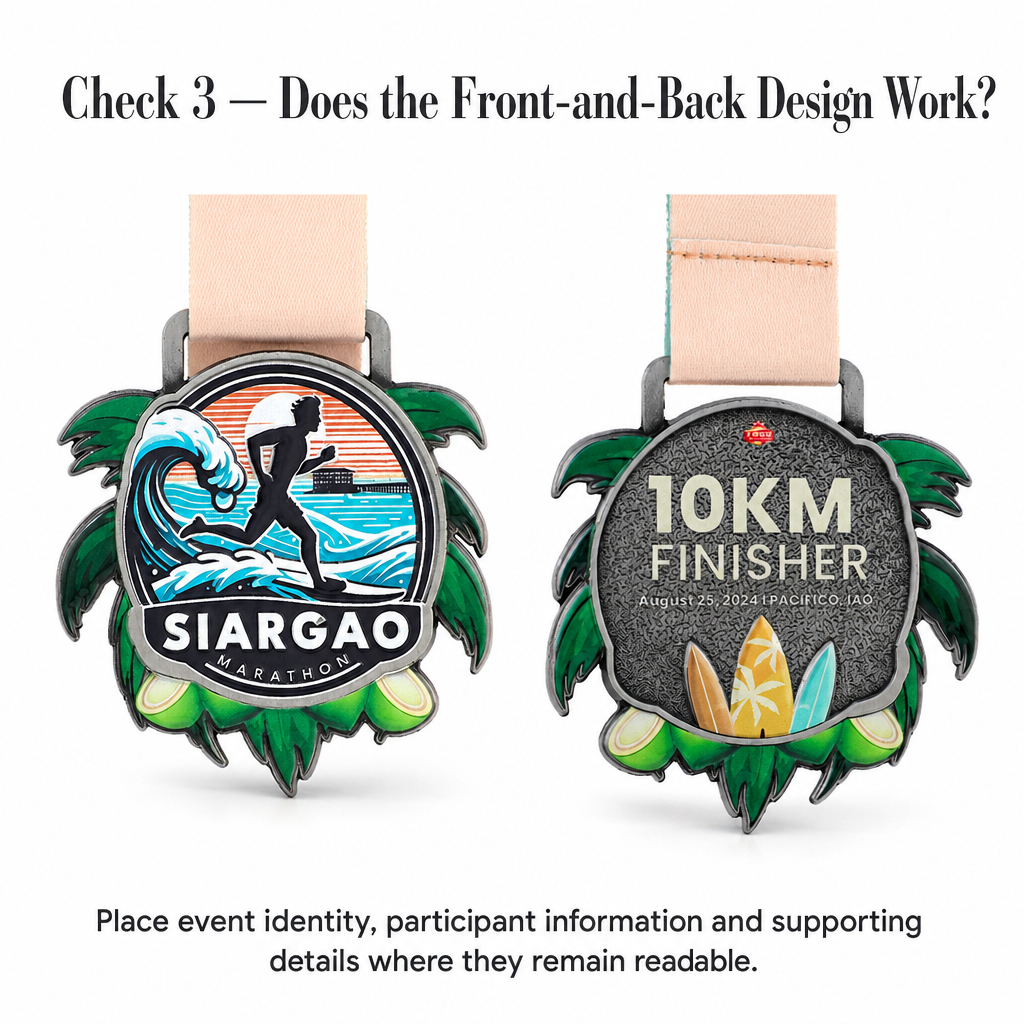
A real front-and-back medal comparison showing how event identity and participant information can be distributed across both sides.
The front and back should be planned as one medal, not as two unrelated artworks.
The front side often carries the strongest event identity, main symbol or visual scene. The back can carry supporting information such as a distance, finisher wording, date, location or organization message, depending on the project brief.
During review, check:
- Whether the front has a clear visual focal point
- Whether the back has enough space for its information
- Whether the text remains readable at the final size
- Whether the ribbon and hanger position work on both sides
- Whether the two sides share a coherent outline and design language
- Whether the information is placed on the correct side
The supplied front-and-back example demonstrates why this review should happen before production preparation. Once both sides are viewed together, it is easier to identify missing information, crowded text or an imbalance between the two surfaces.
Check 4: Will the Relief Stay Clear?
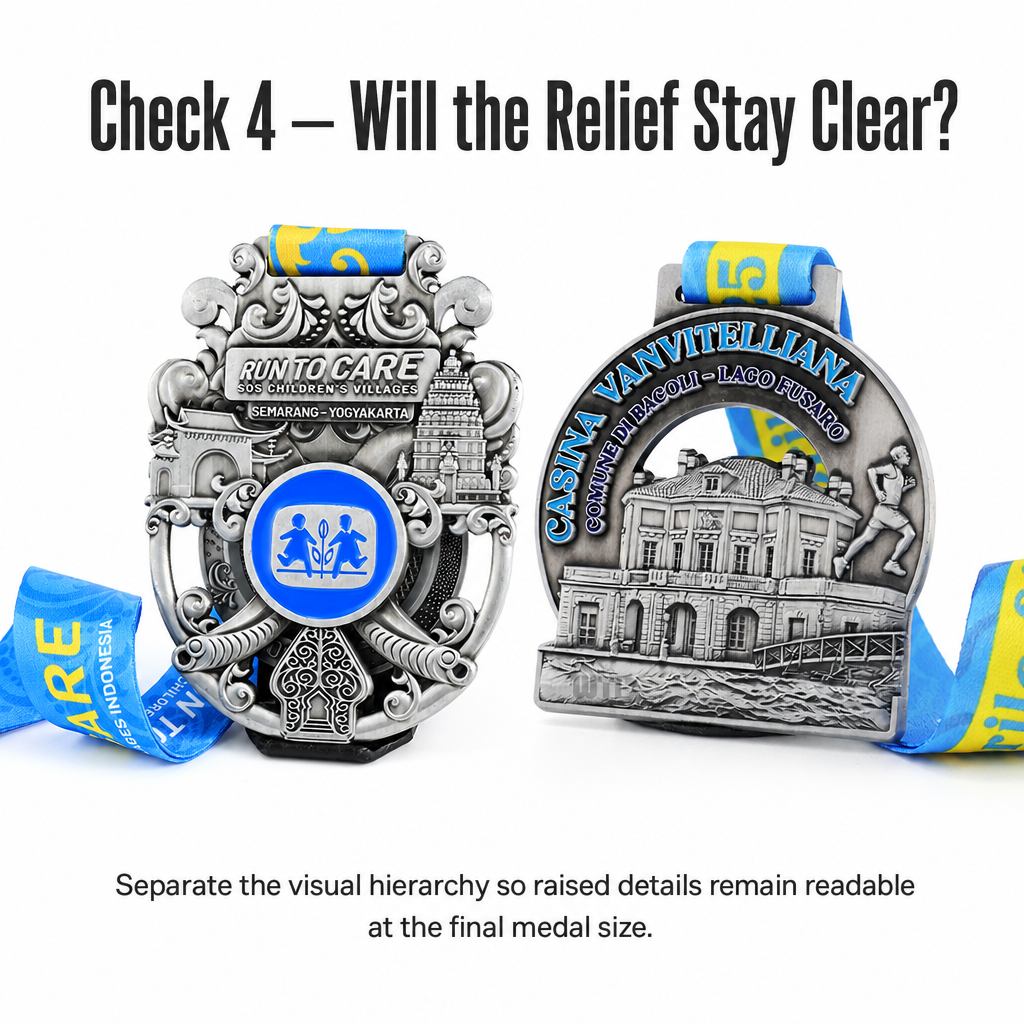
Real relief-medal examples showing layered architectural, decorative and event details that need a clear visual hierarchy.
Relief gives a medal depth and presence, but more raised detail does not always create a clearer result. When figures, buildings, lettering, borders and decorative elements compete at the same level, the finished design may become difficult to read.
Before mold making, review:
- Which elements should be visually dominant
- Which details should sit behind or support the main subject
- Whether lettering has enough separation from nearby relief
- Whether decorative textures are helping or crowding the design
- Whether the relief remains understandable under ordinary lighting
- Whether the design still reads when viewed at the intended medal size
The examples in this article include architectural features, figures, decorative scrollwork and event lettering. They show why relief needs hierarchy rather than simply more detail.
Prioritize the Message
A production-ready design has a clear order of attention. The event identity, main subject and essential information should not be lost among secondary textures. The manufacturer can help identify areas that need clearer separation before the design is committed to the mold stage.
Check 5: Are the Cut-Out Connections Strong?
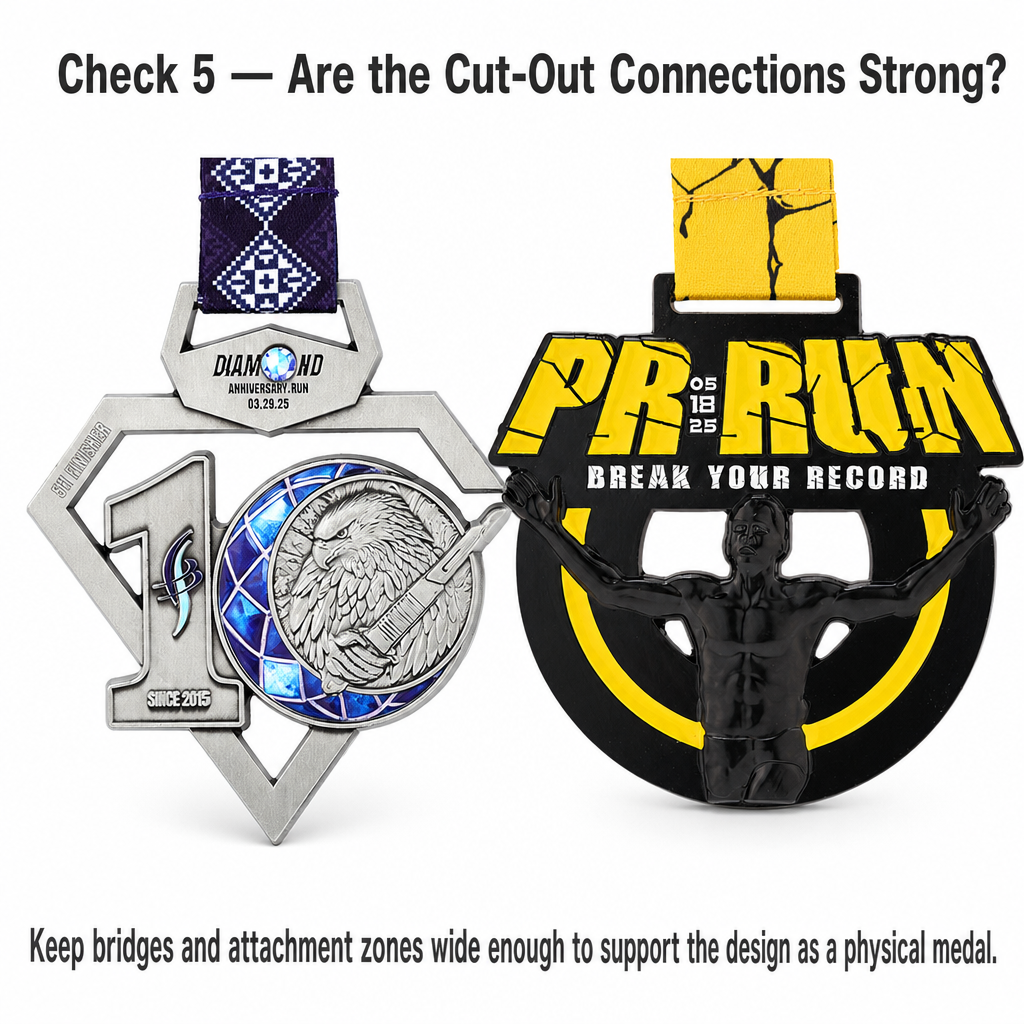
Two real cut-out medal examples showing open spaces, connecting bridges and layered structural sections.
Cut-out medals can create a distinctive silhouette, but every opening changes the way the medal is connected. The open spaces must be considered together with the bridges, outer frame and hanging area.
Check:
- Where the open spaces begin and end
- Whether the remaining bridges connect the major sections
- Whether the outer frame stays visually continuous
- Whether the hanger area is supported by the upper structure
- Whether thin isolated parts are necessary or can be simplified
- Whether the cut-out pattern supports the intended silhouette
The right question is not simply “Can this area be made open?” It is “Will the remaining structure still read as one complete medal?”
Keep the Design and Structure Aligned
The two real examples show different ways to use open space: one combines a geometric frame with a detailed central subject, while the other uses large openings as part of the design concept. In both cases, the open areas and the connecting sections must be reviewed together.
Check 6: Does the Hanger Match the Medal?
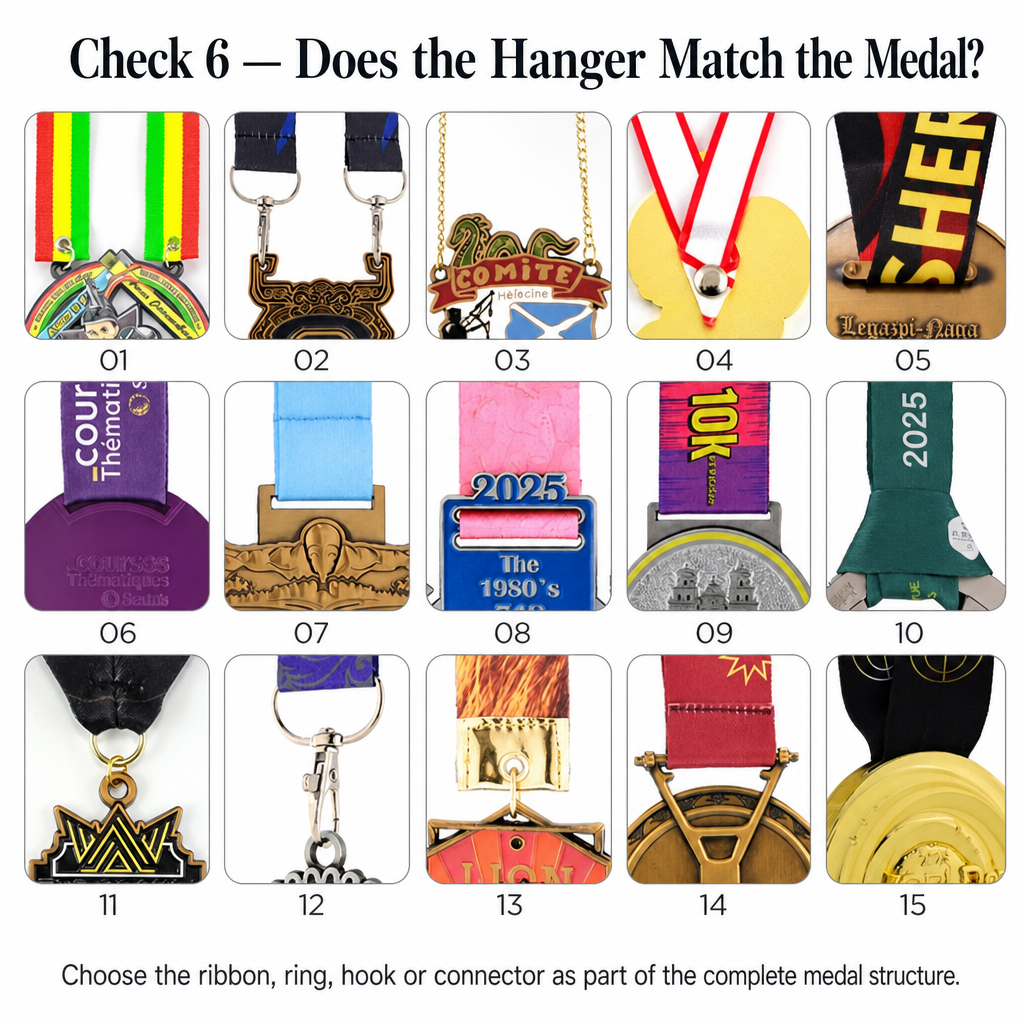
A real reference chart presenting 15 numbered ribbon, ring, hook and connector options for custom medal development.
The ribbon and hanger are part of the finished award structure. They affect how the medal is worn, displayed and visually connected to the event identity.
The supplied reference chart shows 15 numbered options, including different ribbon connections, rings, hooks, chains and decorative hanger approaches. This gives buyers a useful starting point for discussing the attachment system with the manufacturer.
Before final approval, check:
- Whether the hanger scale suits the medal
- Whether the connection is centered and visually balanced
- Whether the ribbon width works with the hanger opening
- Whether the selected option matches the medal’s style
- Whether the hardware creates enough clearance for movement
- Whether the ribbon artwork and medal artwork belong to the same design system
Choosing the hanger at the same time as the medal helps prevent a common mismatch: a well-designed medal paired with an attachment that feels visually or structurally unrelated.
Check 7: Has the Complete Design Been Reviewed as a Production File?
The final check is a complete handoff review. It brings the earlier decisions together before mold making begins.
A production-ready review should confirm:
- The approved 2D artwork version
- The corresponding 3D structure
- The front-and-back information
- The relief hierarchy
- The cut-out and connecting sections
- The hanger and ribbon selection
- The final spelling, dates, logos and category details
This review is also the right time to confirm what is approved and what is still open. A clear approval record reduces the risk of manufacturing from an outdated artwork file or an earlier 3D version.
A Simple Approval Checklist
Before authorizing mold preparation, the buyer can ask the supplier to confirm:
- Which artwork file is the approved reference?
- Which 3D view matches that artwork?
- Are all front and back details included?
- Are the relief and cut-out structures ready for production review?
- Is the hanger and ribbon connection selected?
- Are all visible words, dates and logos checked?
- Is there any unresolved point that could change the production file?
A “yes” to these questions creates a more reliable handoff than a general approval without a defined reference file.
Design Details That Deserve Extra Attention
Small Text and Numbers
Small wording should be reviewed at the actual design scale, not only zoomed in on a large monitor. Important information must remain legible without competing with the main artwork.
Openings and Bridges
Every cut-out needs a structural connection strategy. The more complex the silhouette, the more important it is to review how sections connect around the edge and near the hanger.
Color Areas
Color blocks should be separated clearly from surrounding raised or recessed areas. The final treatment depends on the selected production method, so the factory should review whether the artwork’s color boundaries are suitable for the intended execution.
Ribbons and Hangers
The ribbon is visible whenever the medal is worn or displayed. Its width, attachment and visual relationship with the medal should be considered before the design is locked.
Front-and-Back Information
A medal often has limited space. Deciding which details belong on the front and which belong on the back helps protect readability and avoids last-minute overcrowding.
What to Send a Medal Manufacturer for a Faster Review
To help the factory evaluate whether a design can move toward production, provide:
- The latest 2D artwork file
- Clear indication of the approved version
- Front and back artwork if both sides are customized
- Approximate medal size direction
- Quantity and number of versions
- Color references or color direction
- Ribbon and hanger preferences
- Any required wording, date, logo or category information
- The event deadline if the project is date-sensitive
A manufacturer can give more useful feedback when the design brief and production requirements are presented together.
Final Thoughts
The mold-making stage should begin with a design that has already been checked from both a visual and a physical point of view.
The seven checks are:
- Complete 2D artwork
- Buildable 3D structure
- Coordinated front-and-back design
- Clear relief hierarchy
- Strong cut-out connections
- Matching hanger and ribbon structure
- Complete production-file review
These checks do not limit creativity. They help protect the creative idea as it becomes a real medal.
Zhongshan Wotid Hardware Co., Ltd. can support custom medal projects from artwork review and 3D development through production preparation. Send your medal concept, event information and attachment requirements for a practical production-readiness review.
Table of Contents
- A Good Drawing Is Not Automatically a Production-Ready Medal
- Check 1: Is the 2D Artwork Complete?
- Check 2: Can the 3D Structure Be Built?
- Check 3: Does the Front-and-Back Design Work Together?
- Check 4: Will the Relief Stay Clear?
- Check 5: Are the Cut-Out Connections Strong?
- Check 6: Does the Hanger Match the Medal?
- Check 7: Has the Complete Design Been Reviewed as a Production File?
- Design Details That Deserve Extra Attention
- What to Send a Medal Manufacturer for a Faster Review
- Final Thoughts