 EN
EN

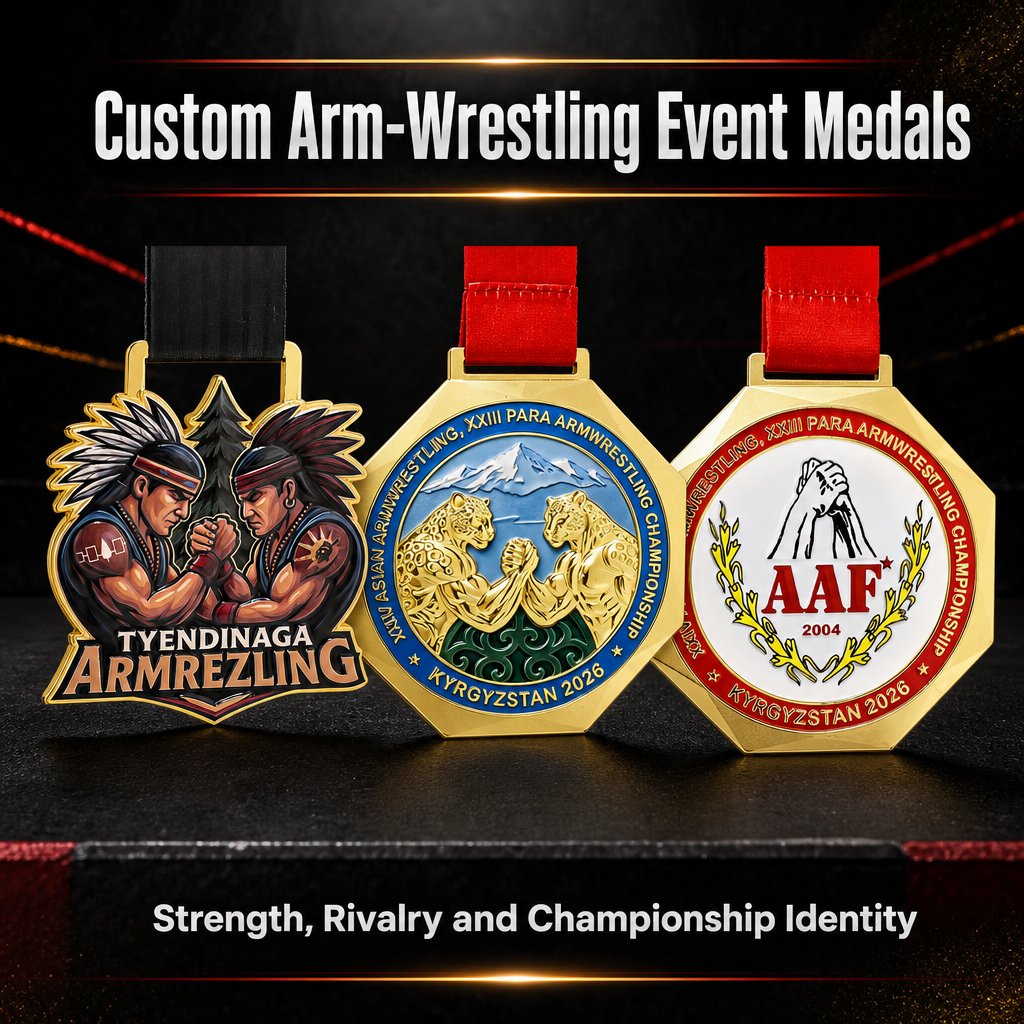
What Is Arm-Wrestling as a Competitive Sport?
Arm-wrestling is a one-on-one strength sport in which two competitors place their arms on a dedicated table and attempt to force the opponent's hand toward the pin pad. Although the contest looks simple, competitive arm-wrestling requires much more than raw arm strength.
Grip control, wrist stability, hand placement, forearm power, shoulder positioning, timing and technique all influence the outcome. Competitors often train specific muscle groups and technical movements rather than relying only on general weight training.
An organized arm-wrestling event may include different weight classes, right- and left-arm categories, age groups, experience levels and men's or women's divisions. Competitors can participate in local tournaments, national championships, club competitions or international events.
Because the contest is direct and easy to understand, arm-wrestling also has strong spectator appeal. Every match creates a clear moment of tension: two athletes, one table, one grip and one final result. A custom medal should capture that concentrated sense of rivalry.
Why Arm-Wrestling Medals Need a Different Visual Language
A generic running medal or standard round sports award may not communicate the identity of an arm-wrestling event. The sport has several recognizable visual elements that can be translated into metal, relief, color and typography:
- Two competitors locking hands
- A visible arm, wrist or forearm in tension
- The arm-wrestling table and pin pad
- Clenched hands and grip strength
- Muscular posture and direct confrontation
- National, regional or club symbols
- Championship wording and competition year
- Weight class, arm category or organization identity
The strongest designs usually combine a clear action image with information that makes the event official and memorable. The medal should show not only that the recipient won an award, but also what kind of competition created that achievement.
Medal Example 1 — Tyendinaga Armwrestling: Rivalry in the Center
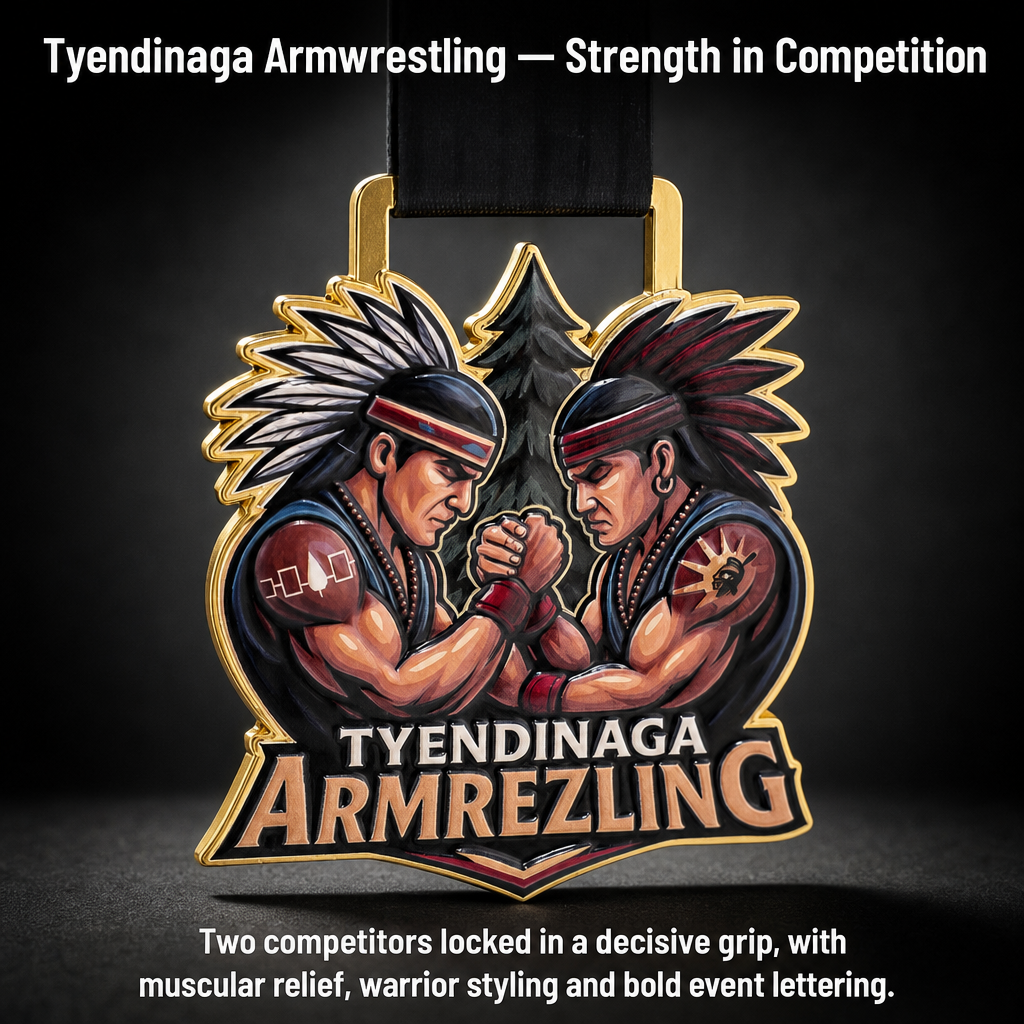
This medal places two opponents in a direct arm-wrestling contest at the center of the design. Their locked hands create the focal point, while the muscular arms, determined expressions, contrasting headwear and large event lettering communicate strength, character and competitive rivalry.
The composition is immediately readable: the viewer understands the sport before reading the event name. The two figures face each other symmetrically, creating visual balance while also showing opposition. The locked grip becomes the central symbol of the competition.
This approach is useful for club tournaments, regional competitions and community events where the event's personality matters. Organizers can incorporate local identity through the event name, team colors, cultural clothing, symbolic background elements or a distinctive visual mascot.
Design takeaway: If the medal is intended to communicate the sport instantly, place the contest action at the center rather than using only a generic muscular arm or an isolated hand.
The Main Design Elements of a Custom Arm-Wrestling Medal
1. The Grip Should Be Visually Clear
The locked hands are the defining gesture of arm-wrestling. If the fingers, wrists or forearms merge into an unclear shape, the medal loses its central meaning.
For a relief medal, the grip should have enough separation from the background and enough depth to remain legible after plating. For a full-color design, the hands and arms should be separated by contrast, outlines or controlled color blocks.
The most important design check is simple: can a viewer identify the arm-wrestling action at a quick glance?
2. Strength Should Be Communicated Without Overcrowding
Muscular arms, clenched hands and a strong posture can convey power, but adding too many decorative elements may reduce clarity. The main figures should remain the strongest visual feature, with event text and secondary symbols supporting the composition.
3. Event Identity Must Be Easy to Read
The event name, tournament title or organization name should be positioned where it remains readable when the medal is worn or photographed. Long titles may need a curved layout, separate banner or larger outer frame.
4. The Medal Should Match the Competition Level
A local club event may use a bold character-driven design. A national championship may need a more formal structure with organization identity, year, location and official championship wording. The visual tone should match the status of the event.
Medal Example 2 — Asian Armwrestling Championship: A Complete Front-and-Back Story
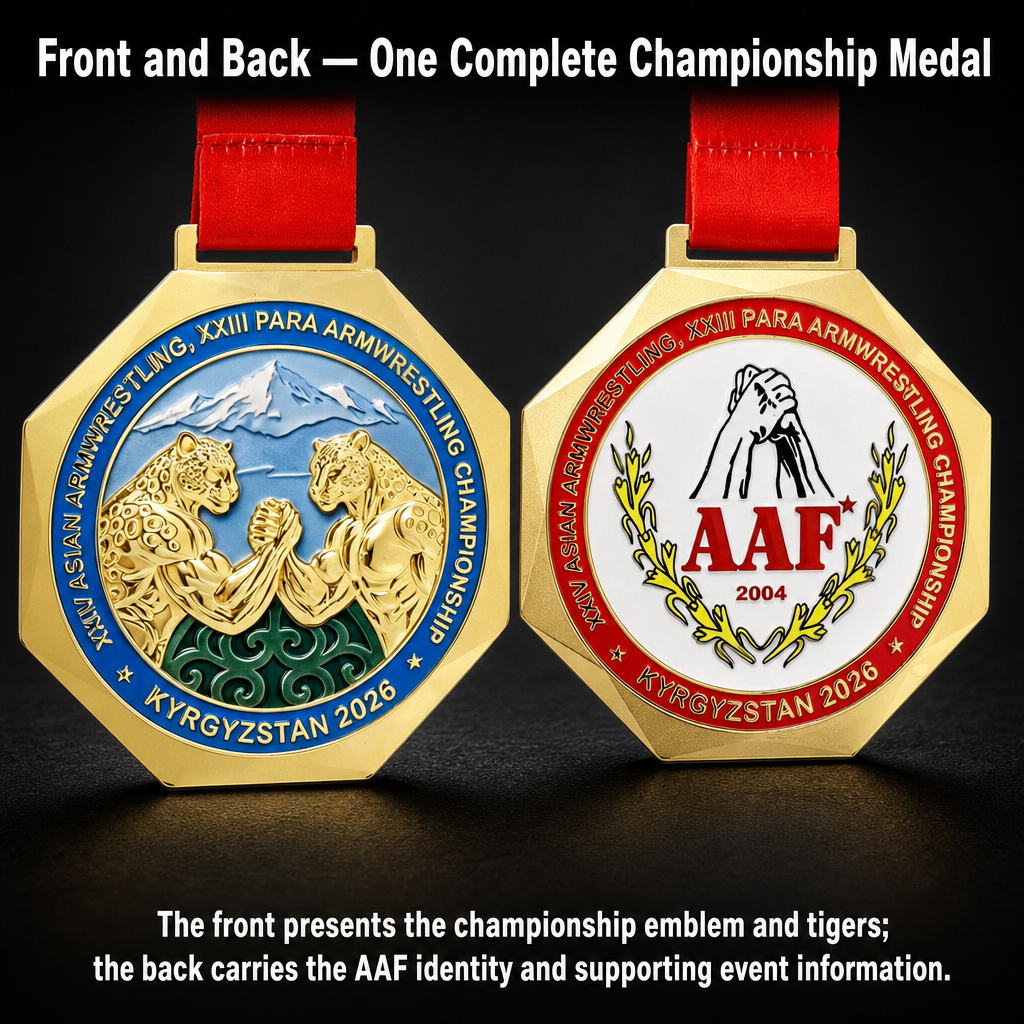
The front presents a gold championship emblem with two tiger figures locking hands against a mountain backdrop and green ornamental detail. The back carries a different arm-wrestling graphic with the AAF emblem, laurel wreath, organization text and the Kyrgyzstan 2026 event identity. Together, the two sides tell a more complete championship story than a front-only design.
The front and back of this medal serve different purposes. The front uses a powerful symbolic composition: two tigers mirror the competitors, while the mountain background creates a strong regional and championship atmosphere. The back provides official organization identity and additional event information in a more formal layout.
This is an effective approach for championship-level medals because it gives the medal two visual modes. The front feels ceremonial and powerful; the back functions as an official record of the event.
Design takeaway: The reverse side does not need to repeat the front. It can carry the federation, association, organizer, year, country, motto or secondary arm-wrestling symbol.
Choosing the Right Shape for an Arm-Wrestling Medal
Circular Medals
A circular medal gives the designer a stable frame for a central grip, hand or competitor composition. It is suitable for a clean, traditional championship style and works well when the event name is arranged around the edge.
Shield or Octagonal Medals
A shield or octagonal outline can create a stronger championship presence. It provides a broad central area for two competitors, tigers, a federation emblem or an official event seal. The angular border also gives the medal a more authoritative, tournament-oriented appearance.
Custom Silhouettes
An arm, clenched hand, table, competitor profile or symbolic animal can become part of the outer outline. This makes the medal more distinctive, but the silhouette must remain structurally stable and comfortable to wear.
Layered or Multi-Part Designs
A separate hanger, banner, emblem or charm can add hierarchy to the medal. However, additional parts should support the main story rather than make the award difficult to handle or too heavy for the ribbon.
Colors, Plating and Visual Hierarchy
Color and plating should help the viewer understand the medal's status and identity.
Gold plating can communicate championship status, prestige or a first-place award. In the Asian championship example, the gold outer frame and tiger relief create a formal, ceremonial appearance.
Silver or antique silver can emphasize engraved or sculpted details and provide strong contrast around hands, arms, table elements and lettering.
Red and blue are effective for competition identity because they create a strong visual contrast and can distinguish teams, sides, categories or official organization colors.
Dark backgrounds can make metallic relief and gold edges appear more dramatic, while white or lighter backgrounds make the design easier to inspect in a product catalog.
For gold, silver and bronze award levels, it is usually better to keep the core design consistent and change the plating or selected color accents. This makes the award hierarchy clear while preserving a unified event identity.
Information to Include on a Custom Arm-Wrestling Medal
Depending on the event, the medal may include:
- Event or championship name
- Organizing federation, association or club
- Country, city or venue
- Competition year
- Weight class
- Right-arm or left-arm category
- Men's, women's or youth division
- Champion, finalist or placement wording
- Event motto or symbolic phrase
Not every item needs to appear on the front. A well-planned front-and-back structure can separate the content: the front highlights the competitive achievement, while the back carries formal organization and event information.
Before production, check every name, abbreviation, year and country reference carefully. Small text around a circular border is especially sensitive to spacing and spelling errors.
What to Check Before Ordering Arm-Wrestling Medals
1. Confirm the Competition Identity
Decide whether the medal represents a club tournament, regional event, national championship, federation competition or an informal strength challenge. The design language should match the event's level.
2. Confirm the Award Categories
Clarify whether you need one common medal or separate versions for weight classes, arms, divisions and placements. This affects the quantity, color system, plating and text layout.
3. Check the Central Action
Make sure the grip, hands and arm position remain visually clear. The main action should not be hidden by oversized text, decorative borders or too many symbols.
4. Review the 3D Structure
If the design contains two competitors, tigers, hands, muscles or table details in relief, review a 3D rendering before mold production. This helps identify areas that are too thin, too crowded or difficult to plate evenly.
5. Decide What Goes on the Back
Use the back for official association identity, event year, country, venue, motto or a secondary graphic. Treat it as part of the medal experience rather than an empty surface.
6. Match the Ribbon to the Medal
A powerful competition medal needs a ribbon that feels equally intentional. Solid red, black or blue can create a strong sports identity; printed ribbons can carry the organization name, championship title or national colors.
7. Confirm Weight and Wearability
Arm-wrestling medals often use strong visual relief and substantial borders. The final size, thickness and weight should be balanced with the ribbon width and attachment hardware so that the medal can be worn comfortably.
Final Thoughts
Arm-wrestling may be a more specialized event category than running or football, but that specialization is exactly what gives its medals strong design potential. The sport has a clear central action, recognizable physical tension and a competitive story that translates naturally into metal relief, symbolic figures, bold lettering and championship colors.
The best custom arm-wrestling medals make the contest recognizable at a glance. They show the grip, the strength, the rivalry and the organization behind the event. With a carefully planned front, a meaningful reverse side and a well-matched ribbon, the medal becomes more than a prize — it becomes a record of the competitor's achievement.
Zhongshan Wotid Hardware Co., Ltd. creates custom sports and strength-event medals with personalized shapes, relief, plating, color, ribbons and front-and-back artwork.
Contact us with your arm-wrestling event name, competition categories, quantity and preferred design direction to start a custom medal proposal.
Table of Contents
- What Is Arm-Wrestling as a Competitive Sport?
- Why Arm-Wrestling Medals Need a Different Visual Language
- Medal Example 1 — Tyendinaga Armwrestling: Rivalry in the Center
- The Main Design Elements of a Custom Arm-Wrestling Medal
- Medal Example 2 — Asian Armwrestling Championship: A Complete Front-and-Back Story
- Choosing the Right Shape for an Arm-Wrestling Medal
- Colors, Plating and Visual Hierarchy
- Information to Include on a Custom Arm-Wrestling Medal
- What to Check Before Ordering Arm-Wrestling Medals
- Final Thoughts