 EN
EN

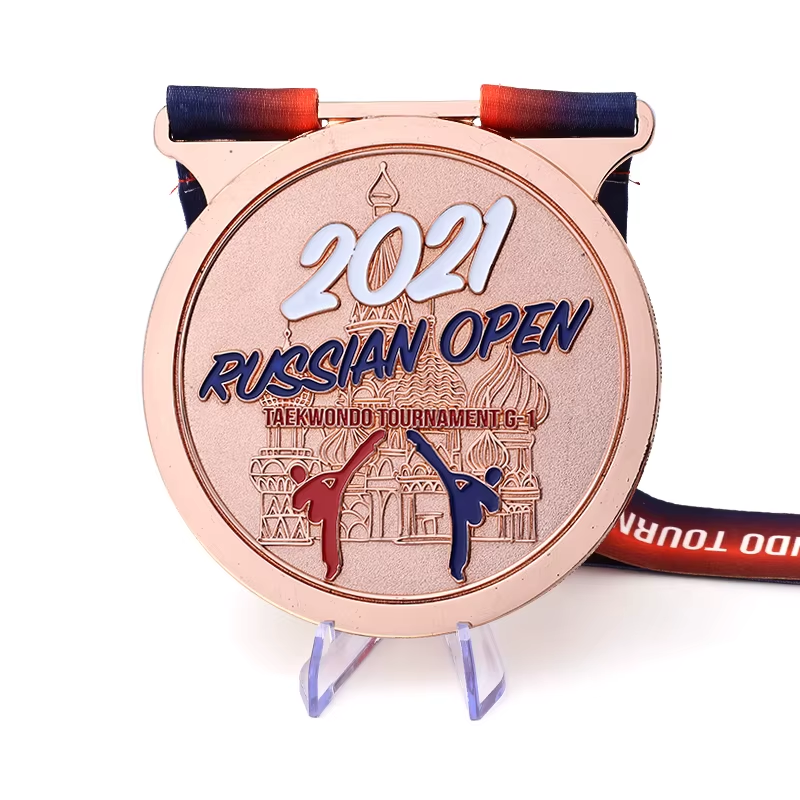
Why Walking Medals Drive Long-Term Habit Adherence
The science of tangible rewards in behavior change and dopamine reinforcement
Getting actual rewards such as walking medals actually does something interesting inside our brains that helps build good habits over time. Some research found that getting real physical awards can bump up dopamine levels around 18 percent according to a study from the Journal of Applied Sport Psychology back in 2022. This creates that brain connection where people start associating hard work with getting something nice back. The reason these physical items work better than digital badges is because they engage multiple senses at once. When someone holds a medal, they feel its weight, notice how it looks, maybe even run their fingers over the texture. All this helps create stronger memories. Looking at some numbers, about two thirds of people who got medals kept exercising regularly compared to just over a third who didn't receive anything physical. That shows why having something real to hold onto can turn short term excitement into long lasting healthy habits.
How walking medals transform abstract goals into concrete, milestone-based progress
Walking medals convert vague aspirations like “get healthier” into actionable, measurable achievements through three key mechanisms:
- Visual progress tracking: Each medal represents a specific distance (e.g., 100km walked), making cumulative progress physically visible
- Immediate feedback loops: Awarding upon completion creates instant positive reinforcement
- Social reinforcement: Displaying medals prompts recognition from peers, further validating effort
This transformation explains why 78% of participants maintain fitness habits for over five years when using milestone markers (HealthGroovy, 2023), compared to 42% relying solely on intrinsic motivation. Abstract goals become sustainable behaviors only when translated into concrete, celebrated achievements.
Designing Inclusive Walking Medal Programs for All Fitness Levels
From 'race at your pace' to 'walk your way'—low-barrier entry and adaptive milestones
Good walking medal programs really focus on making things accessible for everyone by setting flexible goals that work for different body types and abilities. Instead of forcing people to hit strict distance targets, these programs use tiered systems where folks get rewards based on their own progress levels. Someone might aim for just 5,000 steps each day while another person works toward hitting 15,000 steps per week. This kind of flexibility helps new walkers feel comfortable without feeling pressured, yet still gives experienced walkers something challenging to strive for. Many programs also throw in other ways to track progress beyond just step counts. For instance, they might reward people who maintain consistent activity over time like completing 30 days straight of movement, or even recognize non-walking activities such as meditation sessions. These adaptable approaches mean individuals with limited mobility aren't left out of the fun. What starts as a simple "race at your pace" concept becomes something much broader when it turns into genuine "walk your way" participation across all ability levels.
Commemorative vs. competitive: When walking medals celebrate participation, not performance
When companies switch from competitive challenges to recognition-focused initiatives, it really transforms how people get motivated in their wellness programs. Walking medals that reward participation instead of showing off on leaderboards help keep everyone engaged without making them feel they need to run marathons just to win something. The emphasis is on showing up regularly rather than beating someone else's steps or sprinting faster. This actually helps reduce stress for folks who aren't used to being active at work. Studies suggest that employees who sit most of the day stick with their exercise routines around 53 percent more often when there's no pressure to outperform coworkers. These little metal tokens become meaningful keepsakes that represent personal progress, not some sort of fitness trophy. Take a look at what some programs have come up with lately:
- Journey Milestones: Recognition after 100 total walking sessions
- Community Challenges: Team-based medals for collective step goals
- Wellness Integration: Medals for combining walking with hydration or mindfulness
By celebrating showing up rather than outperforming others, organizations create psychologically safe environments where 78% of employees report sustained engagement (HealthGroovy, 2023).
Walking Medals in Practice: Integration with B2B Wellness Platforms
Seamless API-driven medal fulfillment for corporate wellness and virtual challenge providers
Corporate wellness programs get a real boost from walking medals that automate reward distribution using API technology. The system connects to current wellness platforms so that whenever someone reaches their daily step goal, a physical medal gets shipped right out. Virtual challenge companies love this because it cuts out all the manual work involved. Participation numbers automatically feed into the fulfillment systems, which means admin costs drop around 70 percent according to the Wellness Tech Benchmark Report from last year. Setting things up isn't complicated either. HR folks just need to decide what counts as achievement points, pick out some medal designs they like, then watch employee participation grow department by department through those handy dashboard tools.
This system works with wearables and those popular step counting apps out there, forming what we call a feedback loop that keeps people motivated. When workers hit their targets, they get instant notifications along with actual prizes, which helps reinforce good habits through our brain's reward system. Companies have noticed something interesting too: programs where small achievements earn badges tend to keep people engaged 42 percent longer than ones that only offer yearly awards. What makes all this possible? The underlying technology is built on flexible APIs that can handle massive numbers of users worldwide without breaking a sweat logistically speaking.
Wellness platforms are finding that built-in medal systems really set them apart from competitors. A recent study showed that companies with automatic reward features get clients onboarded 65 percent quicker than those without (source: Wellness Tech Benchmarks 2023). What makes these systems work so well? They can handle all sorts of different program structures. Some people love racing against others, while others just want to participate without competition. The best part is when those digital achievements become actual physical items someone can hold. This connection between screen time and real world stuff helps reinforce good habits because people actually feel proud when they receive something tangible for their efforts.
FAQ
What are walking medals?
Walking medals are tangible rewards given to individuals for reaching certain walking goals, helping to reinforce long-term habit adherence through physical rewards.
How do walking medals promote long-term habit adherence?
By physically rewarding accomplishments, walking medals increase dopamine levels, engage multiple senses for stronger memory connections, and motivate continuous physical activity.
Can walking medal programs be adapted for different fitness levels?
Yes, walking medal programs offer tiered goals and flexible achievement recognition, allowing participants of varying abilities to compete on terms tailored to their capacities.
How do walking medals function within corporate wellness programs?
Walking medals, using API technology, integrate seamlessly with existing wellness platforms, automating reward distribution and encouraging participation through instant feedback and tangible incentives.