 EN
EN
Powerlifting-Specific Design Requirements for Weightlifting Medals
Why Generic Sports Medals Undermine Powerlifting’s Gravitas
The medals in powerlifting need to really stand for what the sport represents. Generic stuff just doesn't cut it anymore because these awards end up making the whole competition feel less special than it should be. When athletes are moving massive weights that most people can't even imagine lifting, they want something real to show for their effort. A recent poll from last year showed around 7 out of 10 top lifters think those flimsy, run-of-the-mill medals don't properly acknowledge all the work they put into training day after day. Powerlifting isn't like other sports where style matters as much as substance does here. The medals ought to have actual weight both literally and figuratively. They should feel substantial when held, look impressive on display, and carry meaning beyond just being another piece of metal someone hands out at the end of a meet.
Optimal Dimensions: Heft, Wearability, and Visual Authority in Weightlifting Medals
Tournament-tested proportions balance gravitas with comfort:
| Diameter | Thickness | Weight Range | Purpose |
|---|---|---|---|
| 80–90mm | 3–5mm | 100–150g | Premium adult competitions |
| 60–70mm | 2.5–3mm | 70–90g | Junior divisions |
These dimensions ensure visual impact without compromising wearability during extended ceremonies or daily display. Larger formats also accommodate detailed strength motifs—barbells, load plates, or biomechanical silhouettes—while preserving legibility and tactile distinction.
Material Selection: Zinc Alloy, Bronze, and Stainless Steel for Durable Weightlifting Medals
The structural quality of materials just can't be compromised when it comes to trophies. Zinc alloy stands out as a budget friendly option that lasts longer than regular copper, being roughly four times harder. This makes it great for mass produced awards at big events where the trophy surfaces get handled constantly. Then there's bronze, which brings a certain class to the table. The aged look many people associate with championship trophies in weightlifting and similar sports comes from bronze naturally developing that distinctive greenish tint over time. When we need something that really holds up against all conditions, especially in gyms or places with lots of moisture in the air, 304 grade stainless steel is hard to beat. It fights off rust, won't bend easily, and stands up to scratches pretty well. Tests show that zinc alloys hold onto those engraved details even when hit with impacts 50% stronger than what pewter can handle. So whether it's player names, competition dates or brand logos, they stay clear and readable for years and years without fading away.
Strength-Coded Iconography: Barbells, Abstract Musculature, and Minimalist Power Motifs
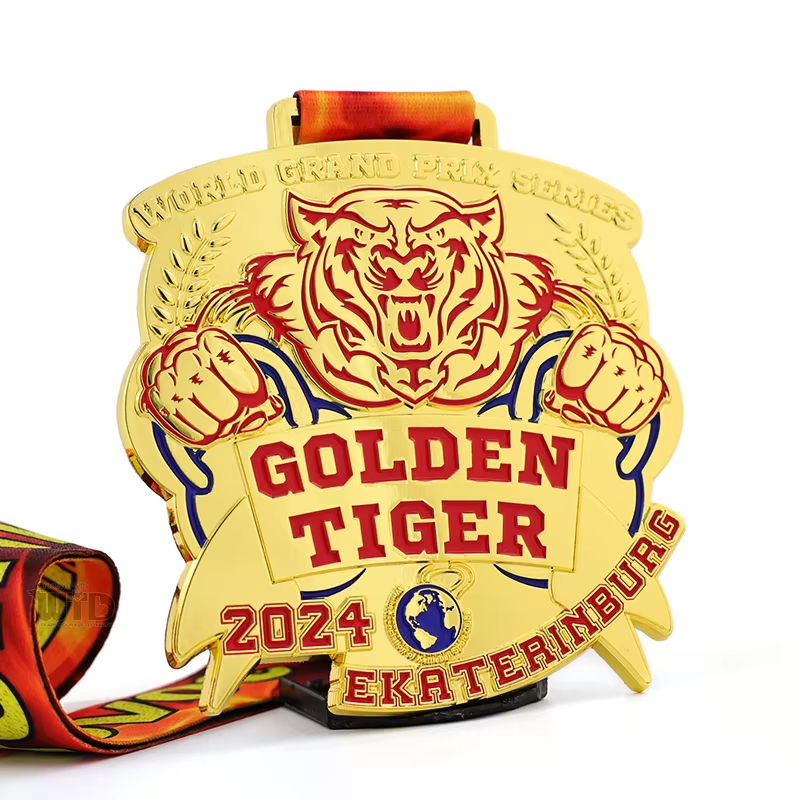
When it comes to powerlifting medals, athletes need something they can recognize at a glance instead of those boring old ribbons or generic laurels. Take a look around any major competition these days and there's a good chance you'll spot barbells featured prominently on about three quarters of them. These symbols work because they speak directly to what matters most in the sport. Some designers are getting creative with abstract muscle patterns too, which somehow manage to show raw strength without being too literal about it. The minimalist stuff is catching on fast too, especially those lightning bolt designs or mountain shapes. Gyms have noticed this trend actually helps keep competitors coming back for more, with some places seeing almost half again as many repeat participants since switching to simpler, stronger imagery. And let's not forget how important it is for all those little details to match real lifting mechanics. Thicker engraving on handles makes sense when thinking about grip pressure during lifts, just like the way plates taper off reminds everyone exactly how weights stack onto bars in actual training sessions.
Front-and-Back Narrative Layout: Honoring Athlete Achievement and Tournament Legacy
Medals become something special when they tell stories on both sides. On one face we see the personal victory stuff like athlete names carved deep below those weight plates or load bars everyone lifts. Flip them over though, and there's all sorts of history waiting to be discovered tournament badges, dates when things started happening, and those official federation symbols etched carefully into the metal. This design actually solves what many call the "faceless trophy" issue. Powerlifting Australia did some research and found out that around 90 percent of their athletes hang onto these double story medals compared to only about 60 percent keeping the old style ones with just one side. The designers also thought through how people actually use these things. They left enough space around the edges so names stay readable even when someone wears the medal, and kept tournament logos from taking over too much real estate on the back side, making sure everything still looks good together.
Engraving, UV Printing, and Enamel Fill: Balancing Permanence, Detail, and Color in Weightlifting Medals
Three complementary techniques define premium customization:
- Mechanical engraving delivers lifelong clarity for essential identifiers—athlete names, dates, and lift records—especially on zinc alloy bases.
- UV printing enables photorealistic color fidelity (up to 16.7 million hues) for complex sponsor artwork or gradients, without compromising structural integrity.
- Enamel filling provides chip-resistant vibrancy: soft enamel adds tactile depth to icons; hard enamel delivers mirror-smooth durability for borders and key symbols.
The strongest approach layers them strategically—engraving core identifiers, UV-printing sponsor elements, and enamel-filling strength motifs like barbell icons. This merges archival permanence with expressive impact.
| Method | Durability | Color Fidelity | Best For |
|---|---|---|---|
| Deep Engraving | 20+ years | Monochrome | Athlete names, dates |
| UV Printing | 5–7 years | Full spectrum | Logos, gradients |
| Enamel Fill | 15+ years | Pantone-matched | Icons, borders |
Tactile Authority: 3D Reliefs and Embossed Logos on Custom Weightlifting Medals
When die-struck 3D reliefs are added to medals, they transform simple flat objects into something much more impressive sculpturally speaking. The high pressure stamping process produces detailed muscle textures, clear barbell shapes, or realistic powerlifting stances that stick out about 0.8 to 1.5 millimeters from the surface. This gives anyone holding the medal a real sense of what the athlete achieved. When combined with those curved center sections that bulge out around 6 to 8 millimeters, the whole thing feels heavier than it actually is, about 28% heavier according to some tests, yet still balances nicely in the hand. The logos of sports federations get raised above the main surface through careful embossing techniques so they stand out clearly when someone holds up their prize on the podium. These physical details create that special connection between the winner and their achievement, which is why serious competition organizers always include them in their championship weightlifting medals.
Quality Assurance Standards for Tournament-Grade Weightlifting Medals
Quality control makes sure that medals meet what the sports world expects from them. For materials, there needs to be at least 0.3 millimeters of plating over zinc alloy bases so they don't corrode when people handle them again and again on podiums. The bronze versions get looked at under magnification to check if their porosity stays below about 0.02 percent. When it comes to size, top event organizers want medals around 85 mm across give or take about 5%, and weighing somewhere between 100 grams to 150 grams for adults. This gives enough weight to feel meaningful but still comfortable to wear. The engraved text has to follow certain rules too - characters need to be no smaller than 1.5 mm tall and cut about 0.3 mm deep into the surface. Every single medal goes through checks for tiny scratches bigger than 0.2 mm, problems with how the enamel fills in, or any issues with the plating looking uneven. Big name manufacturers run tests on their production batches regularly to confirm everything meets these requirements before shipping out.
- ISO 9001-certified process controls tracking each medal batch
- 72-hour salt spray testing (ASTM B117) confirming corrosion resistance
- Weight distribution analysis ensuring balanced center of gravity
- Three-point bend tests verifying structural resilience up to 50kg force
These protocols prevent real-world failures—detachment during celebrations, fading after five years of display, or loss of legibility—preserving the enduring prestige of powerlifting achievement.
FAQ Section
What are the ideal dimensions for powerlifting medals?
The ideal dimensions for powerlifting medals involve diameters ranging from 80–90mm, thicknesses between 3–5mm, and weights spanning 100–150g for premium adult competitions. Junior divisions feature slightly smaller dimensions.
Why is zinc alloy preferred for medal construction?
Zinc alloy is preferred for its durability and cost-effectiveness. It lasts longer and withstands constant handling, making it suitable for mass-produced awards.
What iconography is commonly used in powerlifting medals?
Common iconography includes barbells, abstract musculature, and minimalist power motifs, all of which represent the core themes and elements of powerlifting.
Table of Contents
-
Powerlifting-Specific Design Requirements for Weightlifting Medals
- Why Generic Sports Medals Undermine Powerlifting’s Gravitas
- Optimal Dimensions: Heft, Wearability, and Visual Authority in Weightlifting Medals
- Material Selection: Zinc Alloy, Bronze, and Stainless Steel for Durable Weightlifting Medals
- Strength-Coded Iconography: Barbells, Abstract Musculature, and Minimalist Power Motifs
- Front-and-Back Narrative Layout: Honoring Athlete Achievement and Tournament Legacy
- Engraving, UV Printing, and Enamel Fill: Balancing Permanence, Detail, and Color in Weightlifting Medals
- Tactile Authority: 3D Reliefs and Embossed Logos on Custom Weightlifting Medals
- Quality Assurance Standards for Tournament-Grade Weightlifting Medals
- FAQ Section
- What are the ideal dimensions for powerlifting medals?
- Why is zinc alloy preferred for medal construction?
- What iconography is commonly used in powerlifting medals?