 EN
EN

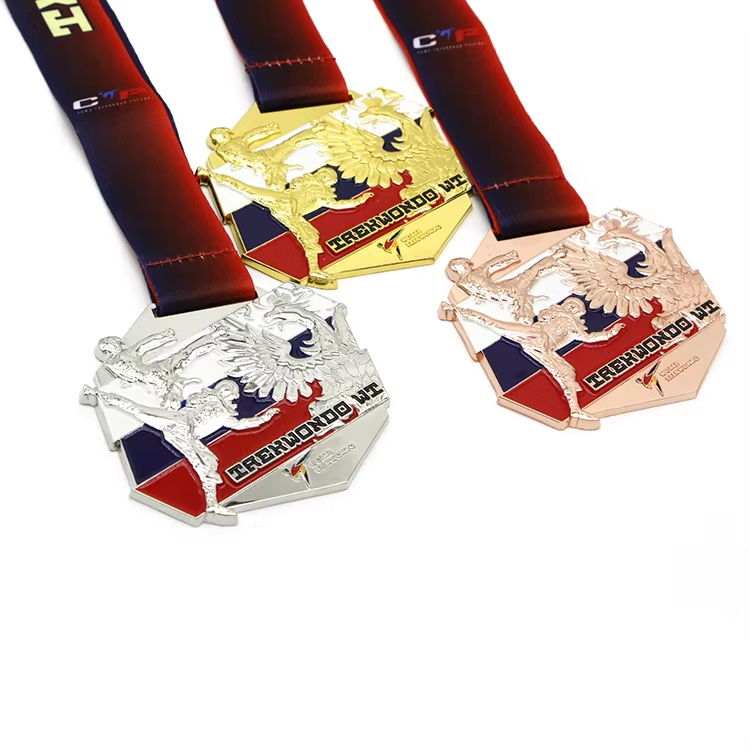
Cultural Symbolism Embedded in Taekwondo Medals
The Taegeuk, Trigrams, and Korean Motifs as Core Design Elements
Each taekwondo medal carries its own story told through symbols carefully chosen for meaning. At the heart of most designs sits the Taegeuk, that familiar red and blue circle representing balance between opposites. This reflects what taekwondo is all about really balancing strength with calmness inside. Around this central symbol we find four trigrams from the Korean flag, each standing for something important in nature sky, land, water, fire. Fire means staying strong when things get tough, water shows how practitioners learn to go with the flow. Many medals also feature traditional Korean designs such as the Mugunghwa flower or beautiful knots along the edges. These aren't just decorative touches they connect competitors to their culture and mark their progress over time. What starts as plain metal becomes something much more meaningful, holding generations of knowledge within every curve and line.
Material Craftsmanship: Bronze Alloys, Patination, and Meaningful Texture
What materials get used matters a lot beyond just looks. Competitive awards tend to stick with high quality bronze alloys because they last forever, sure, but also because they ring out when hit against something hard. That sound reminds many competitors of those old training bells back at dojangs everywhere, ones that would clang whenever someone needed to pay attention during class. Then there's the patina stuff. These special chemical treatments create those greenish brown colors on the surface over time. People call it a living finish since it changes as years pass by, kind of like how martial artists develop their skills through experience. The texture differences tell stories too. Those shiny ridges feel really crisp under fingers, almost like the strict rules governing belt ranks. Meanwhile, the brushed areas have this softer touch that makes one think about all those early morning drills nobody saw coming. And let's not forget about how heavy these things actually are. A medal that weighs more feels more important somehow, doesn't it? But manufacturers also make sure they curve just right so fighters can hold them comfortably after winning. All these physical aspects combine to create something far bigger than metal and polish. They become real representations of what dedication looks like in action.
Competition Standards: How Taekwondo Medals Reflect Global and Institutional Hierarchy
WT, Kukkiwon, and Collegiate Criteria: Gold, Silver, Bronze, and Beyond
The way medals are ranked in taekwondo reflects how the sport is organized at different levels. The World Taekwondo Federation establishes what counts as success in the Olympics, where winning gold means being the best in the world. Silver and bronze come next, showing good performance at international competitions. Then there's Kukkiwon, which acts as the main technical body for the discipline. They give out special medals when someone achieves a higher rank (dan), something that goes beyond just competing well. College tournaments work similarly to these systems but make some changes to fit students who have to juggle schoolwork with training. After all, these young athletes need time for both their studies and their sport.
In addition to regular metal awards, many organizations give out special recognition for good behavior, strong leadership skills, or helping others improve. Younger competitors typically receive participation medals that encourage them to keep coming back year after year. The whole system works pretty well actually, keeping the World Taekwondo rankings intact while still respecting the traditions from Kukkiwon and allowing space for local differences, especially when it comes to college competitions. What kind of metal gets used matters too because it tells people how important something is. Gold is obviously top tier, but plenty of tournaments go with silver coated in gold instead since it costs less money yet still looks impressive enough. These standards help everyone understand exactly what level someone has achieved no matter where they compete around the globe.
Beyond Sparring: Recognizing Poomsae, Promotion, and Lifelong Contribution
Poomsae Medals as Artistic and Technical Validation
Poomsae competition brings out another side of taekwondo that goes way beyond just fighting. These competitions reward competitors for their precision, graceful movements, and how well they express discipline through their forms. When judges watch a performance, they're looking at things like how accurate the angles are, whether the competitor controls their breathing properly, maintains proper ki (energy) focus, and executes each move with good timing. Every single motion tells a story about hundreds of hours spent practicing in front of mirrors. While sparring medals come from actual combat situations where fighters go head to head, poomsae awards recognize something different entirely. They honor the artistry behind these traditional sequences while still respecting the core principles of martial arts. This shows why taekwondo remains both a competitive sport played around the world today and a centuries old practice passed down through generations, combining physical technique with deep philosophical meaning.
Black Belt Promotions and Institutional Awards: Ceremony, Continuity, and Legacy
The black belt ceremony marks when someone moves from just knowing techniques to making a real commitment for life. New black belts get their medals or plaques, which aren't really about reaching the top, but more about starting something new - taking on responsibilities, helping others learn, and standing up for what's right. The grandmasters, called Kwanjangnim, look out for those who live by certain principles every day: being honest, sticking with things even when tough, controlling impulses, and having that fire inside that won't go out. There are also special awards given after many years of work, like the WT Global Ambassador title, for people who've spent decades teaching classes, keeping traditions alive, or connecting different cultures through taekwondo. These ceremonies do more than celebrate individuals; they keep the tradition going across generations. What starts as a personal achievement becomes part of something bigger, reminding everyone why taekwondo matters not just as fighting style, but as a way of life passed down through time.
Frequently Asked Questions (FAQ)
What is the significance of the Taegeuk in Taekwondo medals?
The Taegeuk in Taekwondo medals symbolizes the balance between opposites and reflects the core philosophy of Taekwondo, which is balancing strength with calmness.
Why is bronze commonly used in Taekwondo medals?
Bronze is used in Taekwondo medals because it's durable and produces a distinct sound reminiscent of training bells, evoking memories of discipline and focus in dojangs.
How do Poomsae medals differ from sparring medals?
Poomsae medals recognize the precision, grace, and expression of discipline in forms, while sparring medals are awarded based on performance in combat situations.
What do black belt ceremonies symbolize with their awards?
Black belt ceremonies signify a lifelong commitment to Taekwondo values, where recipients are recognized for taking on responsibilities and embodying martial art principles.