 EN
EN

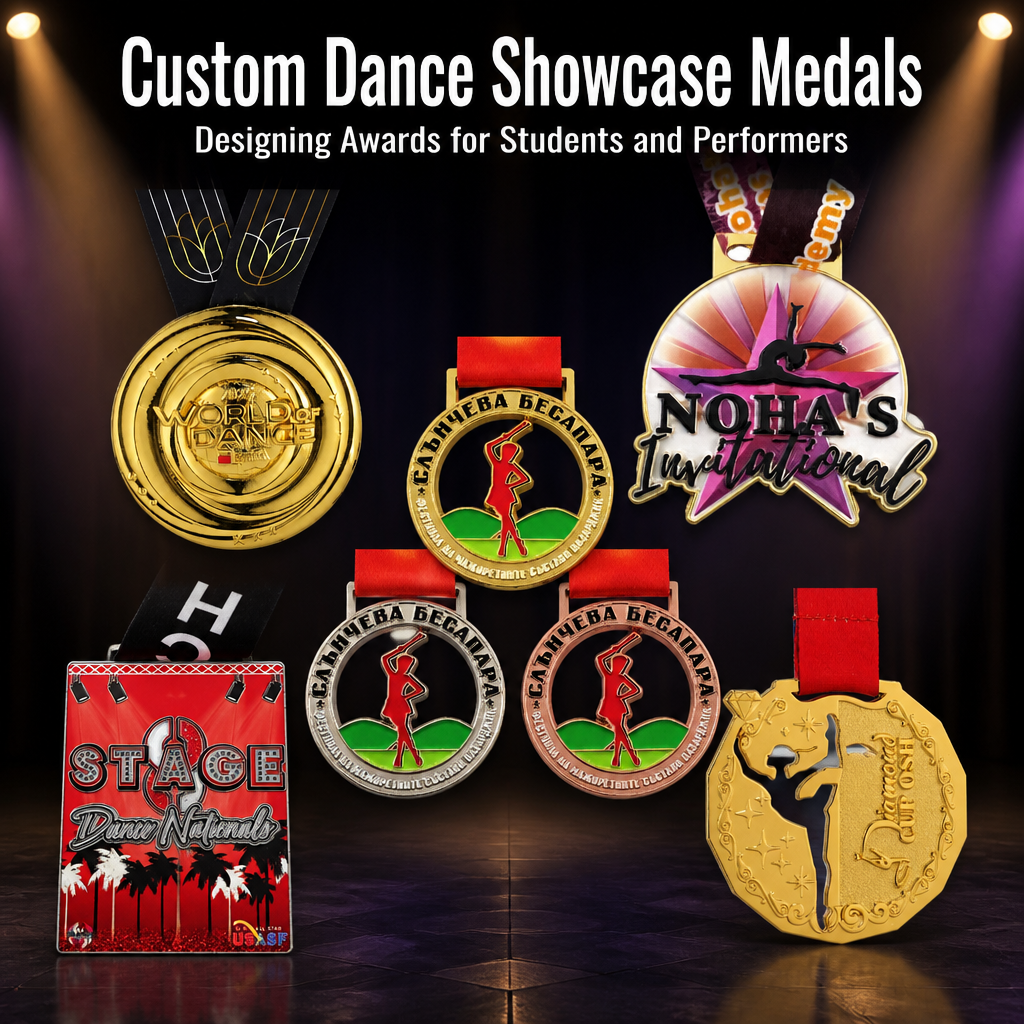
What Is a Dance Showcase — and Why Does the Medal Matter?
A dance showcase is a formal performance event where students present choreographed routines to an audience of family, friends, judges and peers. Unlike a casual recital, a showcase is often structured around competition categories, age groups, dance styles and skill levels. Events range from local school performances and studio annuals to regional invitational tournaments and national championships.
For participants — especially younger students — the moment of receiving a medal at the end of the event is one of the most memorable parts of the experience. Parents photograph it. Students wear it on stage, share it on social media and keep it as a lasting reminder of what they achieved that day.
A medal that looks generic or feels lightweight can undermine that moment. A medal that is clearly designed around the event — its name, its identity, its spirit — turns a simple award into a genuine keepsake.
This is why dance schools, studio owners and event organizers around the world commission fully custom medals for their showcases and competitions. The goal is not just to hand out a prize — it is to give every performer something they will remember.
Dance Showcase Medals vs Standard Sports Medals
Most sports medals are designed around a single clear concept: a runner, a swimmer, a trophy, a podium. Dance medals require more nuance.
A dance event may celebrate many different things at once: a student's first time performing on stage, a competitive result in a specific discipline, years of training recognized at an annual showcase, or a community of students unified around a school identity.
The best dance medals communicate all of this at once — through shape, graphic, color, text and ribbon — without becoming visually complicated or losing their coherence as a wearable award.
Medal Design 1 — World of Dance: The Power of Simplicity
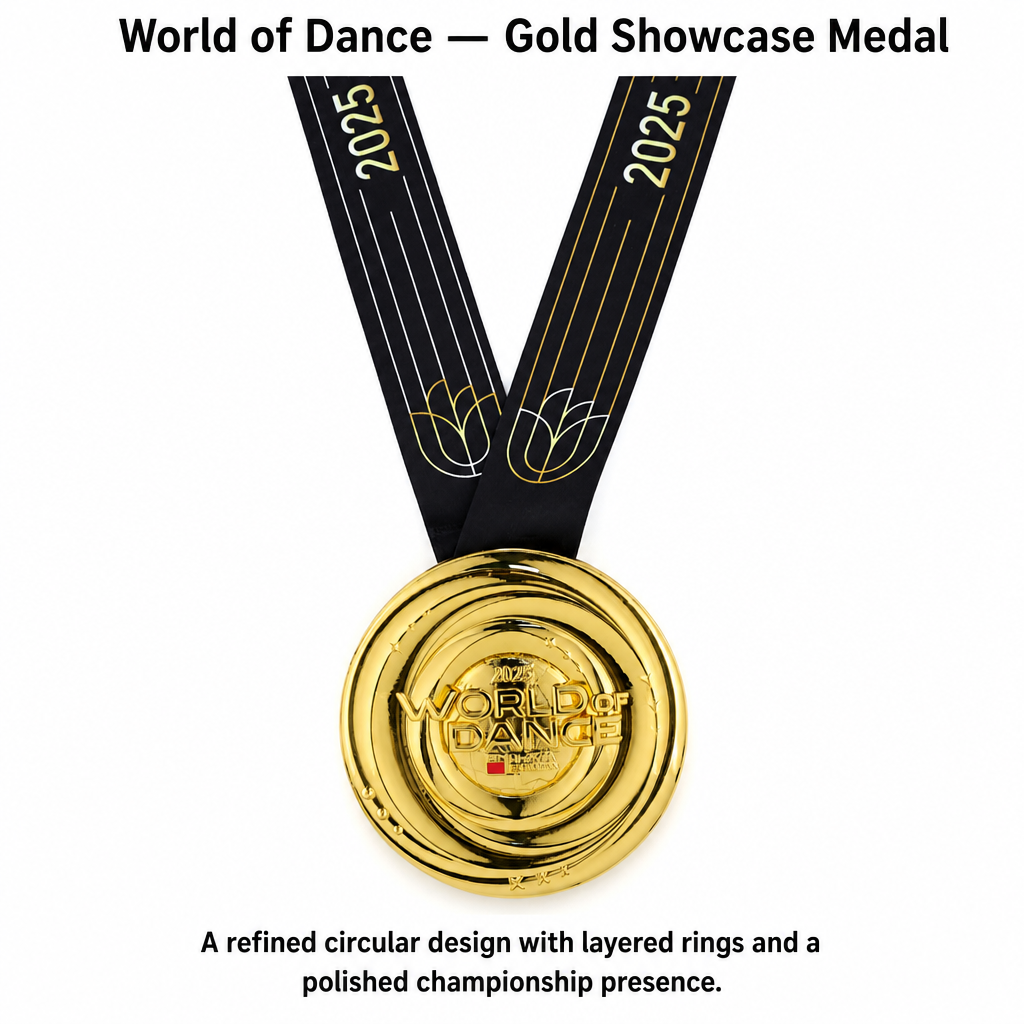
A refined circular medal with layered concentric rings and a high-gloss gold-tone finish. The "World of Dance" event identity is inscribed at the center. The accompanying black ribbon features gold floral line graphics — a deliberate design choice that connects the ribbon to the medal as a single visual system.
Not every dance medal needs a complex die-cut silhouette. This circular design demonstrates that a strong plating finish, a clearly recessed center inscription and a coordinated ribbon can produce a premium, stage-appropriate award. The high-gloss gold surface reflects stage lighting effectively and photographs well in indoor event environments.
This type of design is particularly well-suited for major annual showcase events where the event name and year are the primary branding elements, and visual restraint is preferred over bold color or graphic complexity.
What Makes a Dance Medal Design Work
Before specifying shape, color or graphic style, it helps to define what the medal needs to communicate:
1. Event identity: What is the name of the event? Is it a showcase, recital, gala, invitational or championship? Should the event name be the most visible element?
2. School or organization identity: Does the awarding organization — a dance studio, academy or association — need to be visually prominent on the medal?
3. Achievement level: Is this a participation medal for all students, or a tiered award for specific placements? Will there be gold, silver and bronze versions?
4. Dance style: Does the event represent one discipline (ballet, contemporary, jazz, hip-hop) or multiple styles? Should the dancer motif reflect a specific movement style?
5. Audience: Is the medal primarily for young children, competitive teenagers, adult performers, or a mixed group? This affects size, weight and the visual tone of the design.
Medal Design 2 — Noha's Invitational: Shape as Statement
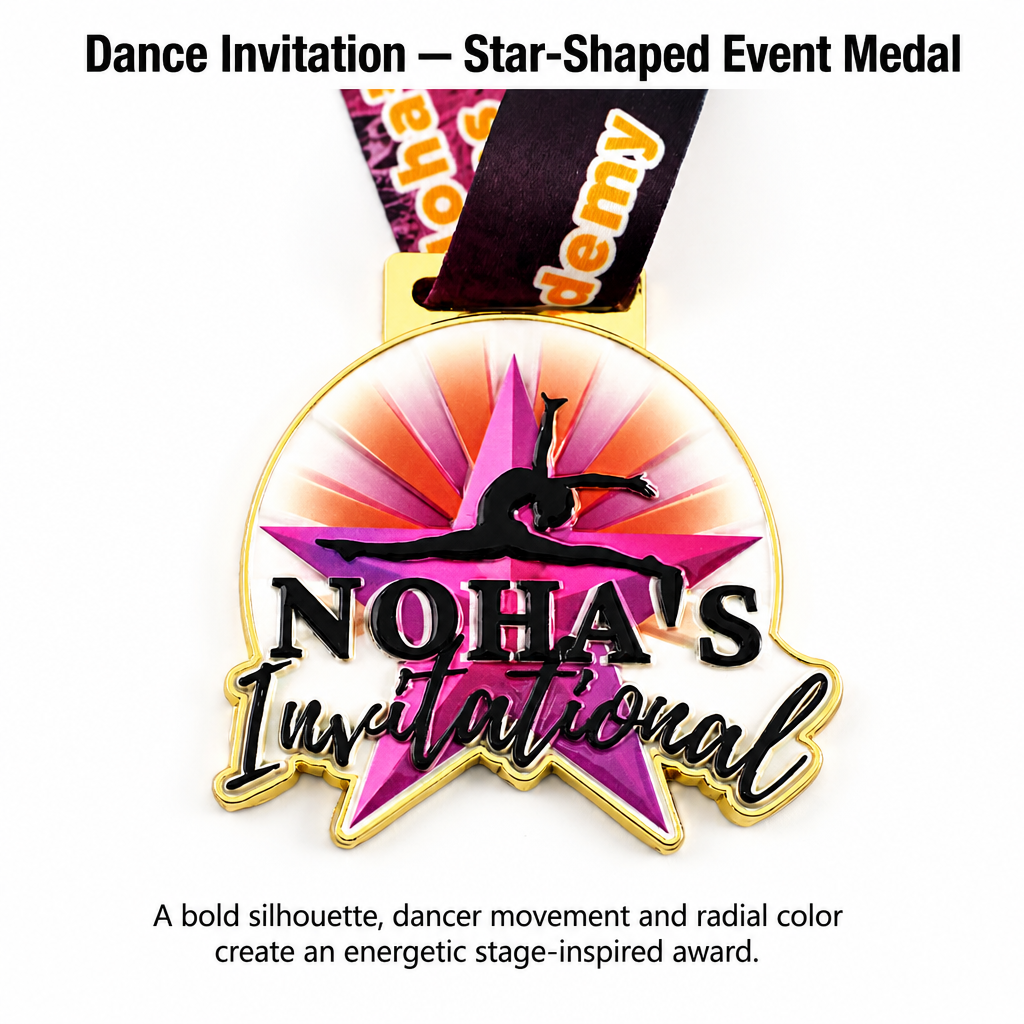
The Noha's Invitational medal uses a star-shaped die-cut outline with a radial starburst color fill, a raised black dancer silhouette in a split-leap pose, and bold black-outlined lettering for the event name and competition title. The printed full-color ribbon carries the academy name. The gold border edge reinforces the premium tone of the award.
This design shows how the medal shape itself can carry meaning. A star communicates achievement, aspiration and performance excellence — values that align naturally with the dance invitational format. The dancer silhouette in mid-leap adds movement and energy without requiring complex engraving, because it is rendered as a clean raised profile against a printed color background.
For invitational tournaments with younger participants, this combination of bold color, clear graphics and a recognizable shape tends to produce strong results: the medal is immediately understood as a dance award without relying on text to explain what it represents.
How to Choose the Right Medal Shape for a Dance Event
Die-cut custom shapes allow the medal to carry meaning before a single word is read. The shape itself communicates the event's personality.
Circular: Timeless and formal. Works well for flagship annual showcases and major championships where prestige and longevity are the primary tone.
Star-shaped: Energetic and celebratory. Suited to invitational events, youth competitions and any event that wants to emphasize achievement and excitement.
Dancer or figure silhouette: Directly connected to the art form. Works best when the pose is specific and well-suited to the event's dance style — a ballet arabesque reads differently from a hip-hop stance.
Custom outline with extensions: Allows the medal to have additional shapes rising above or beside the main body — palm trees, wings, stars, instruments or event-specific icons. Requires more complex mold engineering but produces a distinctive result.
Rectangular or square: More contemporary and urban in feel. Works well for national championships and events with a strong graphic identity or lifestyle branding.
The shape selected should match the event's tone and the age group of participants. A baroque ornamental outline may feel out of place at a youth hip-hop championship; a plain circle may feel underwhelming at a formal invitational.
Medal Design 3 — Coordinated Gold, Silver and Bronze Set
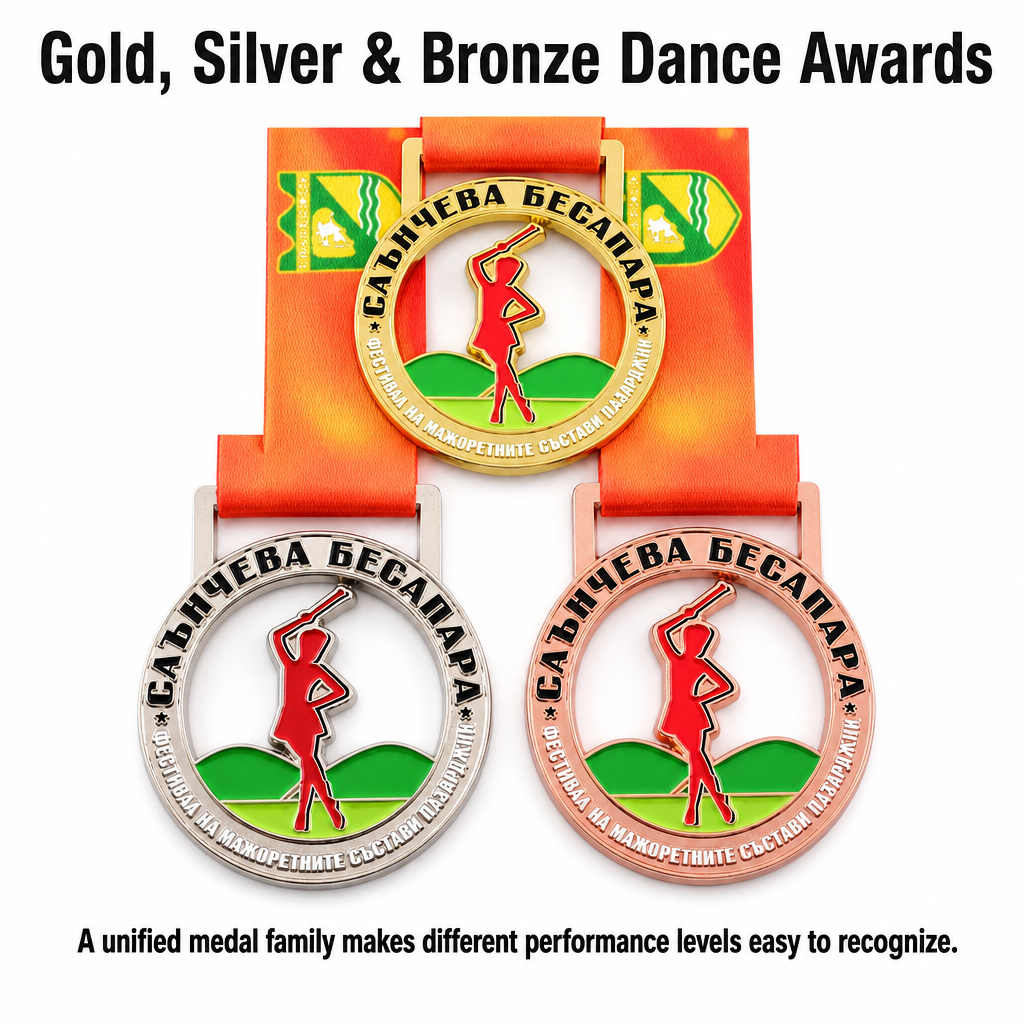
A coordinated three-medal set using the same circular open-frame design, dancer silhouette and event lettering across all three pieces. Gold, silver and bronze plating finishes distinguish placement levels, while a color-filled enamel center reinforces the ranking difference. The orange ribbons unify the set visually regardless of medal plating.
Tiered award sets allow organizers to recognize different placement levels while maintaining a strong visual identity across all medals. The most effective approach is to keep the mold, shape and graphic consistent while using plating finish or center color to differentiate rank. This makes the relationship between medals immediately clear when they are displayed together at an award ceremony.
For dance events with multiple categories — age groups, skill levels, dance styles — a modular approach works well: the same base design can be adapted by changing the center color, center insert or ribbon color for each category, while the overall medal structure remains consistent.
Dancer Motifs: How to Translate Movement into Metal
The dancer silhouette is the most universally used graphic element on custom dance medals. When executed well, it gives the medal an immediate, specific identity that links the award to the art form.
Key considerations when specifying a dancer motif:
Pose specificity: A ballet arabesque, a jazz split leap and a contemporary floor pose are all distinctly recognizable to performers in those styles. A generic upright figure works across all styles but may feel less personal.
Raised relief vs printed silhouette: A raised metal relief dancer requires sufficient depth to read clearly at the medal's size. Very fine limb details — extended fingers, pointed feet, fabric folds — may simplify or merge during die-casting if the relief is too shallow. UV printing or color fills can render finer detail more accurately.
Positive vs negative space: An open-frame cut-out dancer leaves the shape of the figure as a void in the medal body, creating a lighter, more delicate visual effect. A raised solid dancer reads as a stronger, more graphic element.
Scale: The dancer should occupy a meaningful portion of the medal face. A very small silhouette lost in surrounding text and decoration fails to communicate the dance theme clearly.
Medal Design 4 — Stage Dance Nationals: The Stage as Setting
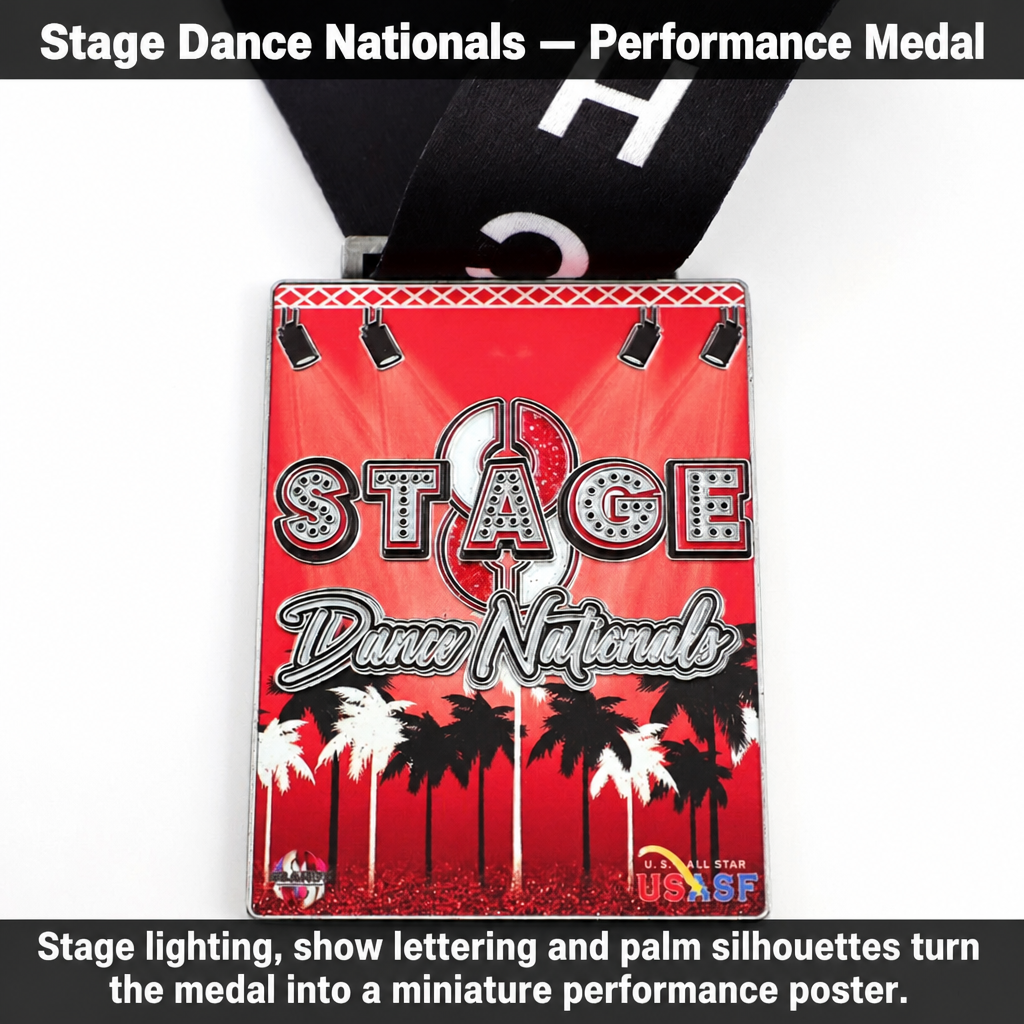
The Stage Dance Nationals medal uses a rectangular format with a full-color printed face depicting stage spotlights, a sunset backdrop and palm tree silhouettes. Raised silver lettering spells out "STAGE" and "Dance Nationals" against the printed background. The medal becomes a miniature stage scene — connecting the performer to the setting where their achievement took place.
This design takes a different approach from dancer-centered medals: rather than showing the performer, it shows the performance environment. The stage setting, spotlight beams and palm silhouettes create a strong sense of place and occasion.
For national or major regional championships, this can be particularly effective. The medal communicates the scale and significance of the event through its visual language — this was a big stage, under real lights, in a real venue. The rectangular format also allows for a larger, more poster-like composition that a circular medal might not accommodate.
Color and Plating for Dance Medals
Color choices on a dance medal communicate mood, category and prestige level. The right combination of plating finish and color fill determines how the medal reads from a distance and how it photographs under event lighting.
Plating finish options:
- High-gloss gold: Warm, celebratory and premium. Strong visual impact under stage lighting. Best for flagship events and principal award levels.
- Antique silver: Adds depth and contrast to engraved details. Works well for designs with fine text, decorative borders or complex relief.
- Shiny silver: Contemporary and clean. Complements bold printed or enamel color fills.
- Black nickel: Modern and dramatic. Pairs effectively with neon or vivid color fills for contemporary or urban event styles.
- Rose gold or copper tone: Softer and more feminine. Used for events with an elegant or romantic visual language.
Color fill options:
- Soft enamel: Recessed color with visible metal borders. Classic texture and depth. Works well for bold, blocked color areas.
- Hard enamel: Flush, smooth surface. Higher precision for fine color areas.
- UV printing: Full-color photographic reproduction. Required for gradients, shaded scenes, portraits or artwork with fine detail. The Stage Dance Nationals and Noha's Invitational medals both use printed color to achieve effects that enamel cannot replicate.
For dance event medals, printed color fills are increasingly common because dance artwork often features gradient backgrounds, complex shading or detailed scene compositions that go beyond standard enamel capability.
Medal Design 5 — Diamond Cup: Open-Frame Elegance
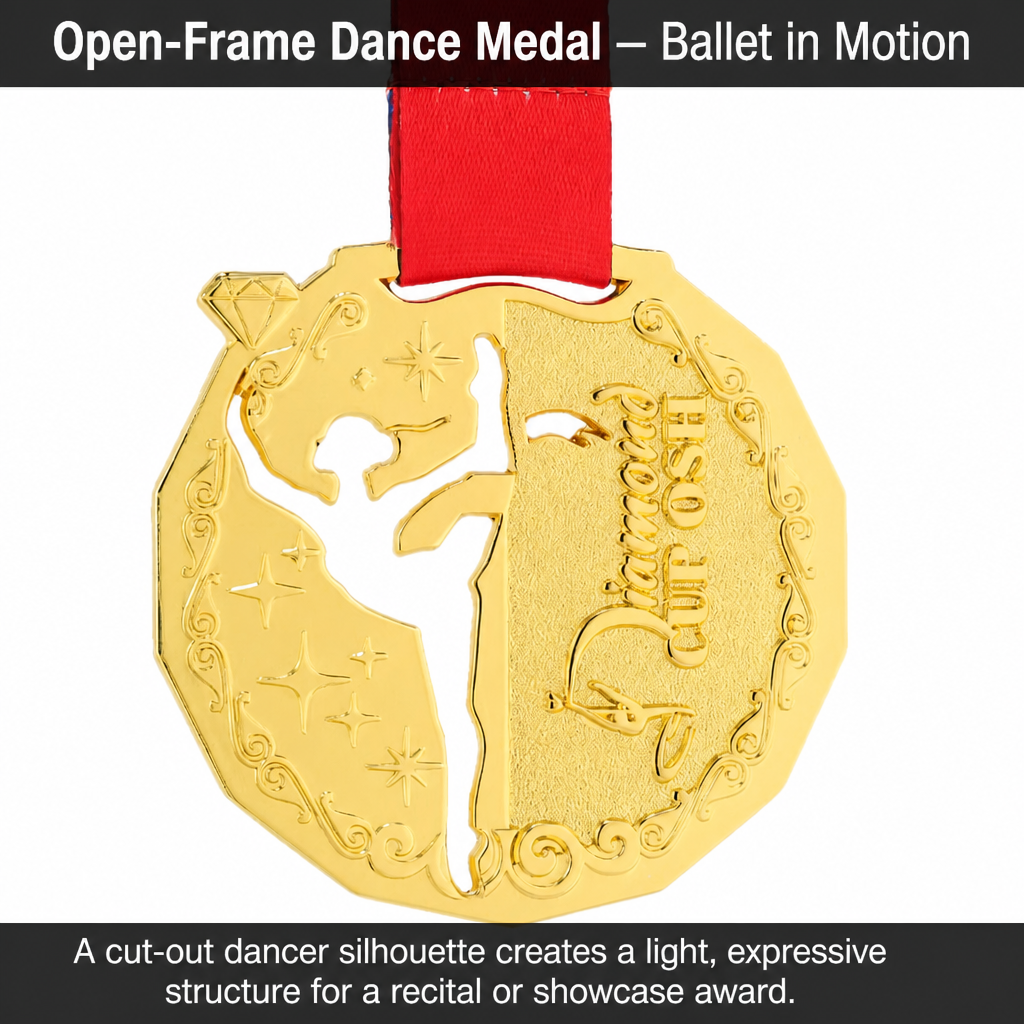
The Diamond Cup OSH medal features an octagonal outer frame with a dancer silhouette cut through the metal body as a negative space. The engraved surface carries star patterns and decorative scroll borders. The dancer silhouette and matte-textured background contrast against the high-gloss raised details, creating a dual-finish visual effect. The red satin ribbon completes the composition with a clear, elegant accent.
An open-frame medal produces a visual effect that solid medals cannot: the negative space of the cut-out dancer becomes a window that allows the background to show through, creating a lighter and more dynamic composition. When the dancer is highlighted by backlighting or held against a bright surface, the silhouette becomes particularly striking.
This type of construction requires attention to structural integrity. The remaining metal frame must be strong enough for normal handling, ribbon attachment and long-term wear. Narrow bridges between the cut-out area and the medal edge need to be reviewed in the 3D design stage before mold production to ensure they will not become fragile or break during use.
What to Confirm Before Ordering Custom Dance Medals
1. Event name, year and category text
Confirm the exact spelling of every line of text that will appear on the medal. Errors discovered after the mold is engraved require re-tooling, which adds cost and time.
2. Participant age and wearability
For young children — especially those aged five to ten — medal weight matters. A medal that is too heavy will pull uncomfortable on a small neck or slide off a thin ribbon. Discuss the expected participant age with your manufacturer and ask about standard weight for the proposed design.
3. Quantity and variation
Determine whether you need a single shared design for all participants, or separate versions for different placements, age groups or styles. If multiple versions share the same shape and mold, tooling costs are incurred once and subsequent variations require only plating or color changes.
4. Ribbon design
The ribbon is a visible part of the award from the moment it is placed around a performer's neck. A sublimation-printed ribbon with the event name, year or school logo turns a standard accessory into a branded element. Confirm ribbon width, color, and whether the text or design will repeat or appear only once.
5. Delivery timeline relative to the event date
Custom die-cast medals require mold production, sampling, approval and mass production before shipment. A total lead time of 45 to 70 days from design confirmation to delivery is typical for first-time productions. Plan accordingly relative to your event date.
6. Sample approval
Request a physical or photo sample after mold production and before mass production begins. This is the moment to catch any detail that reads differently in metal than it appeared in the digital design file. Approving the sample before full production prevents costly corrections at scale.
Working with a Factory on Custom Dance Medal Design
Most dance school owners and event organizers are not product designers. That is expected. A good factory should be able to:
- Convert your logo, event artwork or visual reference into a workable medal design
- Provide a 2D design drawing for layout and dimension review
- Provide a 3D rendering for depth and structure review before mold production
- Recommend shape and structural adjustments if the original design has elements that will not translate well to die-cast metal
- Advise on plating, color and ribbon options suited to the event's visual identity
- Share progress photos at each production stage — plating, painting, finished product — so you are never uncertain about where your order stands
The goal is a medal that reflects your event exactly as you envisioned it, and arrives in time for your performers to wear on stage.
Start Designing Your Dance Showcase Medal
Whether you are organizing a school recital for thirty students or a national championship for hundreds of competitive dancers, a custom medal adds a dimension of meaning to the event that a generic award cannot provide.
Zhongshan Wotid Hardware Co., Ltd. manufactures custom sports and performance event medals for dance schools, studios, academies and competition organizers worldwide. We handle the complete process — from initial design consultation through mold production, finishing, quality inspection and international delivery.
Contact us with your event name, approximate quantity, preferred design direction and required delivery date. We will come back with a design proposal and quote.
Table of Contents
- What Is a Dance Showcase — and Why Does the Medal Matter?
- Dance Showcase Medals vs Standard Sports Medals
- Medal Design 1 — World of Dance: The Power of Simplicity
- What Makes a Dance Medal Design Work
- Medal Design 2 — Noha's Invitational: Shape as Statement
- How to Choose the Right Medal Shape for a Dance Event
- Medal Design 3 — Coordinated Gold, Silver and Bronze Set
- Dancer Motifs: How to Translate Movement into Metal
- Medal Design 4 — Stage Dance Nationals: The Stage as Setting
- Color and Plating for Dance Medals
- Medal Design 5 — Diamond Cup: Open-Frame Elegance
- What to Confirm Before Ordering Custom Dance Medals
- Working with a Factory on Custom Dance Medal Design
- Start Designing Your Dance Showcase Medal