 EN
EN
The Evolution of Recognition: From Traditional to 3D Medal Design
How 3D Medals Are Redefining Corporate and Event Recognition
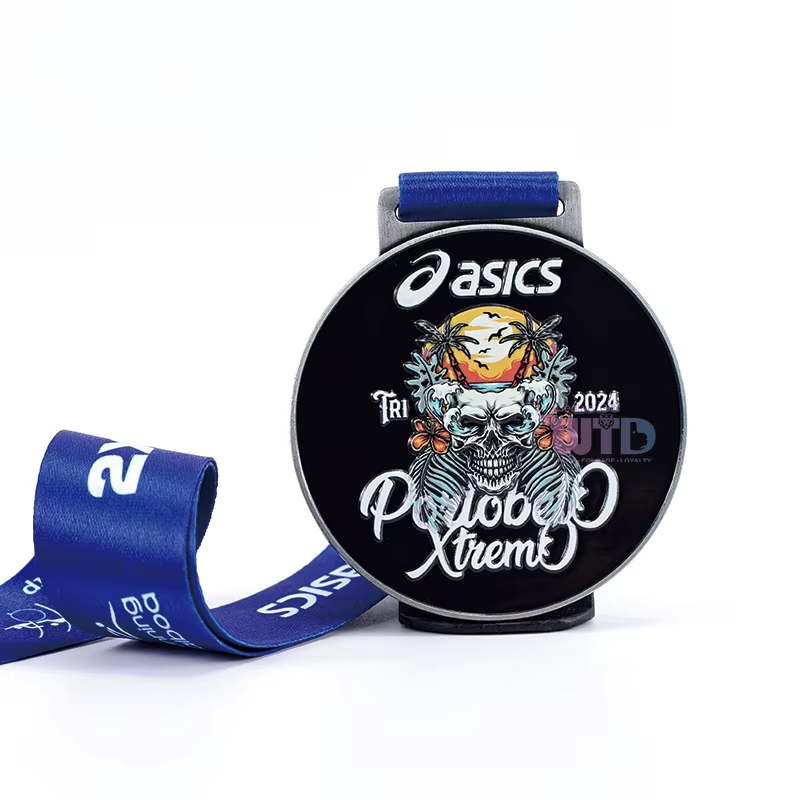
More companies these days are turning to 3D printed medals when they want to give out awards that really stand out. These aren't your basic flat plaques anymore. With modern 3D printing tech, we can actually create all sorts of cool textures, layered designs, even put company logos right into the metal itself. According to a study from last year, around two thirds of workers said they felt 3D printed awards meant something special compared to those old wooden plaques sitting on desks gathering dust. The folks who make these things have figured out ways to work with materials like light weight acrylics and shiny metals that look great but won't break the bank either. Some reports suggest production costs drop anywhere between thirty to forty percent when compared to what it would cost if someone had to craft each piece by hand.
We're seeing more people want something special these days. With 3D tech around, event planners can now make tons of customized stuff for big gatherings without losing what makes each piece unique. Take a sports expo for instance they often go for medals showing athletes in action poses. Sustainability conferences tend to pick up on green trends too, going for medals made from recycled stuff and adding little nature inspired carvings here and there. These kinds of awards really connect with people on an emotional level and keep reminding folks about the brand way past when the actual event wraps up.
Key Advantages of 3D-Printed Medals and Trophies
Superior Visual Impact Through 3D Engraving and Depth
Three dimensional printing brings out depth and fine details that just aren't possible with regular flat engraving methods. When laser etching is used, it adds layers of texture along with logos and patterns that create these cool shadow effects, turning ordinary medals into something almost artistic. People remember things better when they can actually feel them as well as see them, which is why so many companies are jumping on this bandwagon. Brands love how they can tell stories through these tactile designs while also reinforcing their identities in a way that stands out from competitors.
Durability and Advanced Materials in 3D Medal Manufacturing
Manufacturers now use polymer resins, reinforced composites, and metal alloys that resist tarnishing and wear. Unlike traditional zinc or pewter medals prone to scratches, 3D-printed trophies withstand years of handling. Hybrid methods—such as combining printed bases with metallic plating—ensure structural integrity without compromising aesthetic quality.
Cost-Effectiveness and Efficiency of 3D Printing Technology
Eliminating mold fees and minimizing setup time reduces costs by 40—60% compared to conventional die-casting. Design changes require no retooling, allowing organizers to test concepts digitally before production. Bulk orders (100+ units) benefit from economies of scale while retaining full customization, significantly reducing waste from unsold inventory.
Sustainability Benefits of Digital, On-Demand 3D Medal Production
Digital workflows reduce material waste by 72% (Ponemon 2023), as printers use only the necessary amount of material. Cloud-based design collaboration eliminates international shipping for prototyping. At end-of-life, many 3D-printed medals can be ground into raw filaments for reuse, supporting closed-loop recycling aligned with ESG (Environmental, Social, Governance) goals.
Unmatched Design Flexibility with 3D Medal Technology
Breaking Boundaries: Innovative Shapes, Layers, and Finishes
3D medal technology overcomes the geometric limitations of traditional manufacturing, enabling multi-level reliefs, undercuts, and organic shapes impossible with conventional casting. Unlike flat-etched awards, 3D-printed medals support:
- Depth variations (0.1—8 mm) for tactile dimensionality
- Hybrid materials like metallic-infused polymers or translucent resins
- Micro-textured surfaces mimicking fabric, wood, or brushed metal
Designers can integrate layered brand elements, event themes, and recipient-specific details into a single cohesive piece. For example, corporate medals may embed company mottos within geometric patterns, while sports awards feature tiered finish times encircling a central emblem.
Customization for Events, Achievements, and Brand Identity
Modern 3D printing supports infinite personalization without retooling. A single production run can deliver:
- Variable engraving (names, dates, metrics) in 12+ languages
- Gradient color transitions for logos or event themes
- Modular components such as swappable emblems or attachable pendants
Brands leverage this adaptability to create limited-edition collectibles, while event organizers produce scaled-down versions as wearable pins or keychain attachments.
Overcoming Limitations of Traditional Medal Manufacturing
The old school approach means shelling out big bucks for steel molds, typically running somewhere between $1500 to maybe even $5000 depending on the design complexity, plus companies need to order at least 500 units minimum. But with 3D printing technology, manufacturers can produce smaller runs starting from just 10 pieces without breaking the bank. The digital workflow aspect is another game changer too. Gone are those frustrating 6 to 8 week waits typical of traditional die casting processes. Now production cycles can be compressed down to around three days flat, which makes all the difference when there's an urgent need for custom parts. What used to take weeks of manual finishing work and multiple assembly steps? Those intricate shapes and detailed features that would normally drive up labor costs? They're now coming right off the printer in one piece, ready to go.
The 3D Printing Process: Turning Ideas into Tangible Recognition
From Concept to Creation: How 3D-Printed Medals Are Made
Creating a 3D medal starts with designing it digitally through CAD software. Logos, textures, and text get added to the model with pretty good precision. Once the design is complete, the computer slices this 3D file into thousands of super thin layers that tell the printer exactly what to do. The actual production happens via methods such as SLA Stereolithography or SLS Selective Laser Sintering. These processes construct the medal one layer at a time from materials like strong resins or metal composites. What's interesting is how intricate designs come out looking so clean despite being built layer after layer. Even complicated patterns maintain their quality throughout the manufacturing process.
Precision and Consistency in 3D Laser Engraving
Today's 3D printers can hit really tight tolerances, sometimes down to around plus or minus 0.1 millimeters. That level of accuracy produces sharp details that just aren't possible using older manufacturing techniques. When it comes to laser engraving, it manages to create those delicate lines and subtle color changes without compromising the overall strength of whatever is being made. The result? Every single medal produced in a run stays exactly the same size and has consistent surface finish, no matter if someone orders just ten pieces or needs thousands for distribution at conferences or major sporting events. This kind of uniformity makes all the difference when companies want professional looking awards or promotional items that look great across the board.
Scalability for Bulk Orders Without Sacrificing Customization
Without the need for molds, 3D printing excels at producing bulk orders with individual variations. One production run can include personalized names, achievement tiers, or brand-specific motifs—all while remaining cost-efficient. Automated workflows reduce lead times by 40—60%, empowering organizations to scale recognition initiatives quickly and reliably.
The Future of 3D Medals: Smart Features and Interactive Design Trends
Integrating QR Codes and Digital Links into 3D Medals
3D medals today aren't just sitting there looking pretty anymore. They now come with scannable QR codes and hidden digital links built right into them. When someone scans these codes, they get access to all sorts of stuff linked to the award itself – think achievement certificates, clips from events where the medal was presented, maybe even custom messages from organizers. The numbers tell us something interesting too: this kind of tech-enhanced gifting is expected to jump by around 40% in companies' recognition programs by 2025. What we're seeing here is basically traditional craftsmanship meeting modern tech verification. People who receive these medals can show off their accomplishments not only at parties but also share them online where others can see what they've achieved.
Emerging Trends: Interactive and Multi-Sensory Medal Experiences
Innovations are turning 3D medals into immersive experiences:
- Augmented Reality (AR) overlays animated content when viewed via smartphone
- Textured surfaces combine visual depth with tactile feedback
- Biodegradable resin layers add environmental storytelling value
Industry research shows 68% of event organizers prioritize "memorability through interactivity" when selecting awards, driving adoption of glow-in-the-dark finishes and NFC chips that store performance data.
Balancing Innovation with Functionality in High-Tech Recognition
While smart features expand functionality, manufacturers must preserve usability. Durable epoxy coatings now protect embedded electronics without obscuring design details, and modular components allow upgrades without replacing the entire award. The key is discreet integration—ensuring medals remain wearable, display-ready, and emotionally resonant despite their technological enhancements.
FAQ Section
What are the key benefits of using 3D-printed medals over traditional medals?
3D-printed medals offer superior visual impact, durability, cost-effectiveness, and sustainability benefits. They allow for complex designs, depth, and customization while maintaining lower production costs and reduced waste.
How does 3D printing improve the design flexibility of medals?
3D printing removes geometric limitations and supports innovative shapes, layers, and finishes. It allows for hybrid materials, micro-textured surfaces, and personalization without the need for retooling.
What technological features can be integrated into 3D-printed medals?
3D-printed medals can feature scannable QR codes, hidden digital links, augmented reality overlays, textured surfaces, and biodegradable resin layers to enhance functionality and interactivity.
Table of Contents
- The Evolution of Recognition: From Traditional to 3D Medal Design
- Key Advantages of 3D-Printed Medals and Trophies
- Unmatched Design Flexibility with 3D Medal Technology
- The 3D Printing Process: Turning Ideas into Tangible Recognition
- The Future of 3D Medals: Smart Features and Interactive Design Trends
- FAQ Section