 EN
EN
The Growing Demand for 3D Medals in Athletic Recognition
The world of athletic memorabilia is changing fast as those little metal tokens start becoming real collector items instead of just something people toss in a drawer after crossing the finish line. A recent survey found that around two thirds of marathon runners actually care about what their medal looks like these days, which represents quite a jump from four years ago. For many athletes, these aren't just souvenirs anymore but actual works of art that represent all the hard work they put in. Take those old Boston Marathon medals from decades past, some sell for well over a grand at auctions now. Race organizers have taken notice and begun working with artists to craft detailed 3D designs that capture movement and tell stories through layers of detail. Companies running wellness programs also see value in custom medals, using them both to boost morale and spread brand awareness among participants. Experts think this trend will keep growing at about 20 percent each year until 2025 as more people seek out physical reminders of their achievements.
How 3D Printing Enables Precision, Speed, and Customisation in 3D Medal Production
Accelerating Design-to-Delivery Cycles for Event-Specific 3D Medals
Making medals the old fashioned way takes weeks because someone has to create molds and cast them manually. 3D printing changes all that by cutting down on time. The process builds medals one layer at a time straight from computer files, so there's no waiting around for tools to be made. Manufacturers can tweak designs right up until the last minute if needed. For events like races or tournaments, organizers often wait until almost the day of to lock in final medal designs, adding fresh themes or new sponsor marks as they come along. Prototyping happens fast too, which means catching mistakes early without losing those tiny details that make medals special. All this speed lets companies deliver top quality 3D medals for everything from neighborhood running clubs to Olympic style competitions, and still maintain that handcrafted feel people look for.
Material Options: Balancing Aesthetic Detail, Durability, and Cost in 3D Medal Manufacturing
3D printing unlocks strategic material selection tailored to function, audience, and budget:
- Metals (e.g., bronze, stainless steel) deliver premium weight and longevity for elite or commemorative events
- Metal-infused resins replicate metallic finishes at lower cost while retaining fine sculptural detail
- Engineering plastics offer lightweight durability ideal for youth or high-volume events
- Sustainable composites minimize waste through precise, on-demand material usage
Manufacturers match material properties to use-case requirements—prioritizing resin flexibility for intricate topography or metal robustness for frequent handling—ensuring each medal is both visually distinctive and operationally sound.
Design Impact: Why 3D Relief and Sculptural Form Elevate Emotional Resonance
Telling Athlete Stories Through Layered Narrative and Dynamic Motion in 3D Medal Design
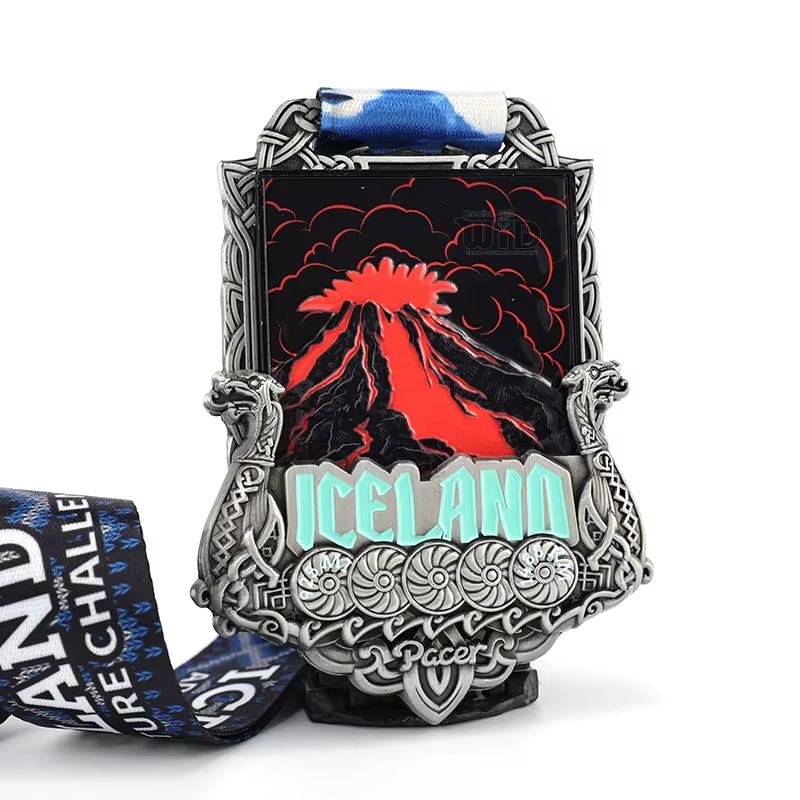
When we talk about three dimensional relief on medals, what we're really doing is turning athletic accomplishments into something people can actually feel. Flat engravings just don't cut it anymore. Think about how much more powerful it is when someone sees a sprinter caught right in the middle of their stride or a gymnast halfway through that vaulting motion. These aren't just pictures frozen in time they're moments captured with real depth and movement. The way these layered designs work creates this amazing visual story telling effect. We have our main characters up front, then all the action happening around them, and finally some background elements like city skylines fading away behind a running figure. This whole setup tells the complete story of an athlete's journey from training sessions to standing on the podium. People connect with these kinds of medals differently because they want to run their fingers over those raised surfaces. Take winter sports medals for example. They often feature those tiny ice crystal patterns coming off a skater's blade. Not just pretty decorations mind you, but actual representations of what happens during competition. Many athletes end up keeping these special medals displayed somewhere important in their homes for decades. There's something really special about combining artistry with the symbols of athletic achievement. Each custom made 3D medal becomes its own little tribute to hard work and determination.
From Standard to Signature: Custom 3D Medals as Brand and Legacy Builders
Sporting recognitions are evolving beyond generic templates. Modern 3D medals act as strategic assets that reinforce event identity while creating lasting emotional anchors for recipients. Unlike mass-produced awards, these bespoke pieces capture institutional ethos and athlete journeys through intentional design—turning fleeting moments into physical legacy.
Beyond Engraving — Embedding Identity, Achievement, and Event Uniqueness in Every 3D Medal
Advanced additive manufacturing enables multidimensional storytelling unachievable with traditional methods. Designers embed:
- Dynamic motion motifs, like tension in an archer’s drawn bow rendered through contour shadows
- Layered event symbols, integrated into topographic relief rather than surface-level iconography
- Textured regional emblems, such as embossed cobblestones or architectural silhouettes reflecting host cities
This curated specificity strengthens brand recall: Participants retain 47% more event details when awards incorporate narrative design elements. By fusing achievement with artistry, organizers transform commemorations into heritage objects—enduring beyond podiums, photos, and social feeds.
FAQ
Why are 3D medals becoming more popular?
3D medals are gaining popularity because they offer a highly customizable and artistic representation of athletic achievement, turning them into memorable collector items.
How does 3D printing benefit medal production?
3D printing enhances medal production by allowing for faster design-to-delivery cycles, customization options until the last minute, and the ability to prototype quickly, ensuring high-quality output.
What materials are used for 3D medals?
Common materials for 3D medals include metals such as bronze and stainless steel, metal-infused resins, engineering plastics, and sustainable composites, depending on aesthetic, durability, and cost considerations.
What makes 3D medal designs distinct?
3D medal designs stand out by incorporating multidimensional storytelling, such as dynamic motion motifs, layered event symbols, and textured regional emblems, which enhance their emotional and commemorative value.